ArchivesLeading Below the Surface

Ep 52: Create Your Summer of Wellbeing: How to Prioritize Wellbeing and Avoid Burnout This Summer

Dive into the science and soul of leadership in this inspiring episode of the Leading Below the Surface podcast! Host LaTonya Wilkins welcomes Megan Dittman, Co-Founder of Front Goose Wellbeing®, to explore what it really means to lead with wellbeing—and why this summer is the perfect time to reset.


Episode Summary

Megan brings over 20 years of corporate HR experience and a deep foundation in holistic wellness to this powerful conversation. Together, she and LaTonya explore the burnout epidemic, the shortcomings of traditional leadership models, and how the most resilient leaders today are turning inward.

Discover how Megan’s RISE model (Response, Intention, Service & Evolution®) provides a roadmap for thriving in today’s unpredictable world, and why companies that prioritize human-centered leadership will rise to the top.


Key Insights:

  • Traditional management models are no longer sustainable for performance or wellbeing
  • Megan’s RISE model reframes leadership through a lens of self-awareness and intention
  • Corporate cultures that ignore wellbeing are at a disadvantage in innovation and retention
  • Leaders must learn to care for themselves to lead others authentically
  • This is the critical moment for organizations to evolve—or risk being left behind

If you’re craving a more grounded, human approach to leadership and success, this conversation will resonate deeply.

  • 👉 Don’t forget to LIKE, SUBSCRIBE, and hit the NOTIFICATION BELL to catch new episodes that push leadership thinking forward.

More About Megan

MEGAN DITTMAN, is Co-founder of Front Goose Wellbeing®; a leadership development organization that translates practices of holistic wellbeing into performance and human-centric leadership skills necessary for today’s modern leader. With over 20 years of Corporate HR experience in her toolbelt before starting Front Goose, Megan learned first-hand what is needed for corporations to not only survive, but to thrive. Megan personally realized that ‘you cannot pour from an empty cup.’ The consequences of old-school management tactics, where leaders squeeze as much as possible from team members with no regard to their wellbeing and its impact on personal performance is clear. Creativity is severely limited, short-term thinking becomes the norm, and people revert to survival instincts damaging effective teamwork. Megan knows there is a better way and believes that today’s work environments are on the cusp of extremely positive change. She believes we are at a critical juncture where strong companies will be separated from the weak, and companies that lead with a human-centric focus will grow & prosper. Companies that cultivate the holistic wellbeing of their workforce will RISE to the top and lead with RISE – Response, Intention, Service & Evolution ®. Megan holds a Master of Industrial Labor Relations from Cornell University, and a BBA in Accounting from the University of Notre Dame. She spent four years in public accounting before pivoting to a 20-year career in corporate human resources. She is a certified Brain-Based Coach from the Neuroleadership Institute, a Certified Health & Wellbeing Coach and Primordial Sound Meditation Instructor from the Chopra Institute and holds the esteemed board certification from the AMA & NBHWC in health and wellness coaching (NBC-HWC). In addition, she is a 200-hour certified yoga teacher and is working towards her 500-hour certification. An avid reader, and lifelong learner, Megan continues to grow in her own wellbeing and leadership practices daily. All these experiences have shaped her passions and expertise in Talent Development, Corporate HR Strategy, Wellbeing, and Leadership.


Connect with us:

Email us at ⁠info@changecoaches.io⁠

Learn more about ⁠Change Coaches⁠ 

Learn more about Coaching Below the Surface 

Follow LaTonya on ⁠LinkedIn⁠ 

Follow Change Coaches on ⁠LinkedIn⁠ 

For More on the Book ⁠Leading Below the Surface 

And, if you loved this episode, please rate and share it!


Podcast Summary Transcript: 

[00:00] Introduction and welcome to the podcast

LaTonya Wilkins welcomes listeners and introduces the theme: creating a Summer of Wellbeing. She shares why this conversation is timely and introduces Megan Dittman as a guest who brings a rare blend of corporate HR and holistic leadership expertise.

[01:15] Meet Megan Dittman and her journey from corporate HR to holistic wellbeing

Megan shares her personal and professional journey, from public accounting to 20+ years in corporate HR. She discusses the turning point where she realized leaders—and organizations—were burning out and needed a more sustainable approach. This led to the founding of Front Goose Wellbeing®.

[04:38] Why wellbeing is more important than ever in today’s leadership landscape

Megan and LaTonya reflect on the post-pandemic leadership crisis and the rising demand for workplaces that support the whole person. Megan explains how wellbeing is no longer a “nice to have” but essential to leadership performance and retention.

[08:10] Burnout, performance pressure, and the old management mindset

They explore how the pressure to “do more with less” continues to erode creativity and drive short-term thinking. Megan talks about witnessing firsthand how top-down tactics are unsustainable in modern organizations.

[11:23] What is Front Goose Wellbeing and the RISE model?

Megan introduces her company’s core methodology: RISE — Response, Intention, Service & Evolution®. She explains how each principle helps leaders reset and shift away from reactive, burnout-driven leadership.

[15:49] Response, Intention, Service & Evolution as core leadership practices

A deeper dive into the RISE framework. Megan outlines how leaders can use these practices to show up more mindfully, make decisions with clarity, and build deeper trust within their teams.

[20:36] How corporate leaders are embracing holistic leadership models

Megan shares stories from organizations beginning to embrace holistic practices like coaching, mindfulness, and wellbeing strategy—not just as benefits but as cultural foundations.

[24:18] Megan’s advice for leaders navigating stress and uncertainty

She offers practical takeaways for listeners, including simple daily rituals and reframing techniques that build resilience. Megan emphasizes that the inner work leaders do can ripple out powerfully across organizations.

[28:05] Why human-centric companies will lead the future

The conversation pivots to long-term strategy. Megan explains why companies that don’t invest in wellbeing will fall behind, while those that foster human-centric cultures will retain talent and outperform peers.

[32:12] Final reflections and where to find Megan Dittman’s work

LaTonya and Megan wrap up with reflections on how to create space for your own wellbeing this summer. Megan shares where listeners can connect with her and learn more about Front Goose Wellbeing.

Ep 51: Redefining Masculinity: Coaching Men of Color to Lead and Live Authentically

Dive into the transformative power of conscious masculinity in this powerful episode of the Leading Below the Surface podcast. Host LaTonya Wilkins welcomes executive coach and founder of The Man Cave, Austin Walker, for a real conversation about how men—especially men of color—can reclaim their emotional health, leadership voice, and sense of purpose.


Episode Summary

In this enlightening dialogue, LaTonya and Austin explore how outdated societal expectations have impacted men’s well-being, relationships, and leadership effectiveness. Austin shares his journey from corporate consulting to coaching men of color and explains why spaces like The Man Cave are essential today. The conversation digs into topics like emotional regulation, stonewalling, unconscious beliefs around money and sex, and how redefining masculinity can transform not just men’s lives but our broader communities.


Key Insights:

  • All people, regardless of gender, possess both masculine and feminine energy; understanding this dynamic is key to leadership and well-being.
  • Emotional suppression—especially among Black men—has deep roots and real consequences in leadership and relationships.
  • “Stonewalling” is a common emotional response for men, often misunderstood; awareness and breathwork can create breakthroughs.
  • Men often link their self-worth to money, success, and sex—but these are societal stories that must be unlearned.
  • The Man Cave provides a powerful community for men of color to be vulnerable, seen, and emotionally accountable.

If you’re passionate about coaching across gender and race, or curious about how masculinity is evolving in today’s world, this conversation goes far beneath the surface.

  • 👉 Don’t forget to LIKE, SUBSCRIBE, and hit the NOTIFICATION BELL to stay updated on new episodes exploring leadership that challenges the status quo!

More About Austin

My name is Richard Austin Walker and I am a man who shows the fuck up. I lead with truth and love. I empower responsibility and possibility.

My practice is a reflection of my commitment to self-actualization and serving my mission in raising the standard of masculinity for men of color. I support BIPOC men to own their truth, own the impact of their leadership, and choose the responsibility of owning all aspects of their lived experiences. I offer 1:1 coaching, men’s groups, a variety of leadership development workshops, and partner with select organizations to empower a culture of leadership. I value building relationships with other men who embody their truth and choose to be leaders.

I host a weekly men’s call for BIPOC leaders to be responsible for how they show up in the world. Each week we explore a monthly theme that is relevant for men of color. The Man Cave is a space for brotherhood, vulnerability, and authentic expression in service to being powerful models of grounded, open-hearted masculine leaders. If you want to drop into our conversation, please fill out our application

Interested in a BIPOC men’s community? Complete The Man Cave Interest form to engage. We meet Monday’s at 12 PM ET and Thursday’s at 6 PM ET. https://docs.google.com/forms/d/e/1FAIpQLScRTGX85d500k_3uJQJNqWrWw2bOsvQHaC6ZRU6y34HalaB2w/viewform

BIPOC men’s retreat this Fall, October 23 – 26, 2025 in James Creek, PA. Learn more at the Leadership Intensive Retreat webpage. https://www.austinwalkercoaching.com/new-leadership-intensive-retreat

#RedefiningMasculinity #CoachingMenOfColor#InclusiveLeadership #EmotionalIntelligence #LeadingBelowTheSurface


Connect with us:

Email us at ⁠info@changecoaches.io⁠

Learn more about ⁠Change Coaches⁠ 

Learn more about Coaching Below the Surface 

Follow LaTonya on ⁠LinkedIn⁠ 

Follow Change Coaches on ⁠LinkedIn⁠ 

For More on the Book ⁠Leading Below the Surface 

And, if you loved this episode, please rate and share it!


Podcast Summary Transcript: 

00:00
LaTonya Wilkins introduces the episode and announces that registration for the Coaching Below the Surface program is open.
Keywords: Coaching Below the Surface, ICF approved, SHRM approved, leadership coaching, cohort

02:00
Austin Walker joins. LaTonya introduces his coaching work with men of color, focusing on masculinity, leadership, and emotional well-being.
Keywords: Austin Walker, coaching men of color, masculinity, toxic masculinity, emotional support

06:30
They discuss masculine and feminine energy, polarity, and the science behind energy work.
Keywords: masculine energy, feminine energy, energy work, polarity, emotional balance

12:45
Austin shares why emotional expression is often suppressed in men, particularly Black men, and how crying can be healing.
Keywords: emotional expression, crying, Black men, mental health, vulnerability

20:10
Austin explains his journey from corporate life to coaching and how therapy helped him find his purpose.
Keywords: career change, purpose, coaching journey, therapy, self-discovery

26:00
They explore the creation of The Man Cave, a coaching community for men of color focused on emotional intelligence and leadership.
Keywords: The Man Cave, emotional intelligence, safe space, Black men, leadership

35:40
Stonewalling, defensiveness, and emotional shutdown in relationships are discussed as common struggles for men.
Keywords: stonewalling, relationships, defensiveness, communication, emotional regulation

45:15
Austin addresses internalized beliefs around money, sex, and success, and how they affect men’s identity and relationships.
Keywords: masculinity, success, money, sex, performance pressure, dating

55:00
They close by discussing partnership, evolving gender roles, and how conscious masculinity can improve relationships and communities.
Keywords: gender roles, partnership, conscious masculinity, trust, relationship dynamics

Ep 50: Inclusion Below the Surface: The Hard Truths and Risks of Abandoning Inclusivity

Dive into the challenging realities of inclusive leadership in this powerful episode of the Leading Below the Surface podcast! Host LaTonya Wilkins welcomes psychologist and author Nadia Nagamootoo to discuss her groundbreaking book “Beyond Discomfort: Why Inclusive Leadership is so Hard.


Episode Summary

In this thought-provoking conversation, LaTonya and Nadia explore why inclusion goes far beyond traditional DEI frameworks and why abandoning inclusivity poses significant risks to organizations and society. They discuss how inclusive leadership impacts innovation, mental health, and our ability to address global challenges, revealing the psychological barriers that make inclusion difficult but even more necessary in today’s world.


Key Insights:

    • Inclusive leadership extends beyond corporate DEI initiatives to impact innovation, mental health, and our approach to global challenges
    • Power dynamics create resistance to inclusive practices, making change difficult but essential.
    • The psychological discomfort of inclusive leadership is something to embrace rather than avoid.
    • Receptiveness to learning about ourselves and others is fundamental to inclusive leadership.
    • Short-term thinking prevents us from seeing the long-term benefits of inclusive practices

If you’re concerned about recent backlash against inclusion initiatives or looking for deeper perspectives on creating truly inclusive environments, this episode offers valuable insights that go below the surface of conventional DEI discussions.

  • 👉 Don’t forget to LIKE, SUBSCRIBE, and hit the NOTIFICATION BELL to stay updated on new episodes exploring leadership that challenges the status quo!

More About Nadia

NADIA NAGAMOOTOO (she/her) is the founder and CEO of Avenir.  She’s a Chartered Psychologist, a MBA and accredited coach with 20 years’ experience in the field of leadership development, culture change and Diversity, Equity & Inclusion.  She’s worked globally to provoke powerful conversations at all organizational levels and develop sustainable inclusive leadership practices.

She is host of the popular podcast show, Why Care?, where she delves deeply into the complex and uncomfortable world of DEI.  Her bestselling book, Beyond Discomfort: Why inclusive leadership is so hard (and what you can do about it) was published in March 2024 and has been shortlisted for the Business Book of the Year Awards 2025.

www.avenirconsultingservices.com – for information about what Nadia’s company does

www.nadianagamootoo.com – for information on the podcast show, book and speaking

www.beyond-discomfort.com – for free resources and tools related to the book


Resources from today’s episode:


Connect with us:

Email us at ⁠info@changecoaches.io⁠

Learn more about ⁠Change Coaches⁠ 

Learn more about Coaching Below the Surface 

Follow LaTonya on ⁠LinkedIn⁠ 

Follow Change Coaches on ⁠LinkedIn⁠ 

For More on the Book ⁠Leading Below the Surface 

And, if you loved this episode, please rate and share it!


Podcast Summary Transcript: 

LaTonya Wilkins:
Hey folks, LaTonya here. I’m so excited to announce that registration for Coaching Below the Surface is now open! You can find more information at ChangeCoaches.io. This program goes way beyond DEI. It’s all about coaching in uncertain environments, creating mutual safety, and building resilience. It’s ICF-approved and SHRM-approved. You’ll meet with a cohort of like-minded leaders who will challenge you to grow in new ways. Visit our landing page to join the waitlist and get a 10% discount if you register by May 15th. We hope to see you there!

LaTonya Wilkins:
Hello everyone, and welcome to the Leading Below the Surface podcast! I’m LaTonya Wilkins, your host, executive coach, award-winning author, and I am so excited to be joined by another author today. I love all my guests, but I especially have a soft spot for fellow authors. She wrote this book—if you’re watching on YouTube, you can see it—Beyond Discomfort: Why Inclusive Leadership is So Hard. It’s such an important topic right now, and I’m so glad to have Nadia Nagamootoo with me. Nadia, thank you so much for being here.

Nadia Nagamootoo:
Thank you, LaTonya. It’s really wonderful to be here. I’m excited to share some of the concepts from my book. As you mentioned, Beyond Discomfort explores why inclusive leadership is so challenging. As a psychologist—I’m a chartered occupational psychologist, which has different names depending on where you are in the world—I’ve worked for over 20 years with organizations and leaders globally. Through this work, I’ve noticed that many leaders are stuck when it comes to diversity, equity, and inclusion (DEI). Not all, but many are stuck for different reasons, and understanding that stuckness is the hard part. It’s about why certain conversations around inclusion jar with people in different ways. What’s fascinating to me is how personal and emotional this work is. It’s connected to our core beliefs and how we see the world.

Nadia Nagamootoo:
That’s what makes inclusive leadership so hard. It’s about reconciling our own beliefs with other realities, and for many, that feels uncomfortable. It’s hard to accept that there are multiple realities out there, and that’s where the discomfort comes from. The whole book is about exploring how our personal values and beliefs can create friction when it comes to inclusion.

LaTonya Wilkins:
I’m getting excited just listening to you, Nadia! You hit on something that’s so important: the emotional aspect of this work. Right now, especially in the U.S., there’s been a lot of attacks on DEI initiatives, but I firmly believe inclusion is about so much more than DEI. There’s a wellness piece, an innovation piece, and even a mental health aspect. What are your thoughts on this? Do you think I’m wrong in pushing for inclusion to go beyond DEI?

Nadia Nagamootoo:
I think you’re spot on, LaTonya. Inclusion is so much more than DEI. It impacts how we see the world, how we behave, how we relate to others, and ultimately, it affects outcomes across many areas—innovation, sustainability, mental health, education, and even caregiving. It really touches all parts of life. If we lean into the discomfort of being inclusive, not just at work but also in our personal lives and interactions with strangers, we could create a better world. We could solve significant global problems if we truly collaborate and embrace our differences.

LaTonya Wilkins:
I completely agree. We have the power to solve big issues if we get beyond the corporate DEI box. But right now, inclusion feels so often constrained by that. So how do you think inclusion can address some of the broader challenges we’re facing, like instability around the world, climate change, or societal inequality? It feels like inclusion has a huge role to play here.

Nadia Nagamootoo:
You’re absolutely right. Inclusion is deeply connected to those broader challenges. The desire for power is often what holds us back from solving big problems. From a psychological standpoint, I’ve seen this desire for power at the core of many societal issues. For example, the cure for cancer could already be out there, but we’re holding onto power instead of sharing what we have to solve problems. The reluctance to share wealth or opportunities—whether that’s through education, access, or resources—is a major barrier. But if we really lean into inclusion, if we bring together our differences, we could change the world for the better. We need to acknowledge that there’s more than enough for everyone.

LaTonya Wilkins:
This resonates deeply. As thought leaders, it’s up to us to rise to the occasion and start tackling these issues. But, as you mentioned, power dynamics play a huge role here. How do you think inclusion fits into power? In the context of leadership, is there a relationship between power and inclusion?

Nadia Nagamootoo:
Yes, absolutely. Power and inclusion are interconnected. Power isn’t inherently bad, but it becomes problematic when it’s unearned. Many people in positions of power benefit from advantages that were not based on their abilities but on factors like gender, race, or socioeconomic background. The discomfort comes when people have to acknowledge that they’ve benefited from systemic inequities. Power can be invisible, but it shapes so much of our world. And when we’re willing to recognize that and be inclusive, it allows us to address these systemic issues.

LaTonya Wilkins:
That’s such an important point. It’s all about recognizing that you don’t have to give up your power to allow others to rise. So, in today’s world, we need people who already have power to be the ones who say, “This isn’t right.” But, as you said, people are reluctant to let go of that power. That’s why we need to shift the mindset, and leaders need to be open to self-reflection and learn about the realities others face.

Nadia Nagamootoo:
Exactly. And that’s what we see in history—those in power don’t always want to let go, even if it’s the right thing to do. But if we can foster an environment where leaders can open their minds to the fact that their success might not be purely due to their talent but because of the system they’ve benefited from, that’s where inclusion starts. It’s about helping them understand that real leadership involves using that power to uplift others.

LaTonya Wilkins:
It’s so crucial for leaders to do that inner work. And speaking of that, in your book, you mention a fascinating 2×2 model that explores receptiveness to learning and willingness to act. Can you explain that a bit?

Nadia Nagamootoo:
Yes! The model shows the relationship between receptiveness to learning and willingness to act. At one extreme, you have high receptiveness and high willingness to act—those who are open to learning and ready to make changes. At the other extreme, you have low receptiveness and low willingness to act—those who are closed off and resistant. Leaders who are open to learning about themselves and others are the ones who can lead inclusively. They understand that discomfort is part of the process, but they push through it for growth.

LaTonya Wilkins:
I love that. It’s all about staying curious and open to learning, especially about the realities of others. We need more leaders who are willing to challenge their own beliefs and act on that new understanding. So, Nadia, where can people find you and connect with you?

Nadia Nagamootoo:
You can find me on LinkedIn, where I’m pretty active. I’m also on Instagram, and my website is NadiaNagamootoo.com. For anyone interested in working with my team globally, you can visit AvenirConsultingServices.com. My book is available on Amazon, and you can find additional resources on BeyondDiscomfort.com, including a free survey tool and workbook.

LaTonya Wilkins:
Thank you so much, Nadia. I’ve really enjoyed this conversation, and I think there’s so much more we could explore. Perhaps we’ll have a part two someday. And thank you to everyone for joining us on today’s podcast. We’ll see you next time on Leading Below the Surface.

Ep 49: Coaching Below the Surface: Coaching Across Differences, Building Safety, and Preparing for the Future of Work

In this episode, we feature a special webinar recording where LaTonya Wilkins, award-winning executive coach and author, introduces Coaching Below the Surface, an ICF-approved coach training program launching in July 2025. This initiative outlines a fresh approach to coaching, emphasizing connection across differences and creating psychological safety in coaching relationships.


Episode Summary

In Episode 49, we dive into a comprehensive introduction of Coaching Below the Surface, a groundbreaking ICF-approved coach training program designed to help coaches navigate the complexities of our VUCA (Volatile, Uncertain, Complex, Ambiguous) world. LaTonya explores how this program prepares coaches to work effectively across differences, focusing on the importance of psychological safety for both coaches and clients. The presentation also introduces the REAL leadership model (Relatable, Equitable, Aware, and Loyal) and how this unique framework addresses the diverse needs of today’s coaching landscape.


Key Insights:

  • Connecting Across Differences: The program highlights the need for coaches to connect with clients across diverse perspectives and challenges, addressing the complexity of the VUCA world.
  • Psychological Safety: Coaches must create “dual psychological safety”—ensuring safety for both themselves and their clients—to foster authentic, effective coaching interactions.
  • KPE (Knowledge, Perspectives, and Experiences): The program introduces KPE as the foundation for understanding the unique differences that coaches and clients bring to the relationship.
  • The REAL Model: This coaching approach is rooted in the REAL model, which stands for Relatable, Equitable, Aware, and Loyal, helping coaches navigate diverse client needs.
  • Target Audience: The program is designed for three key groups:
    • Experienced leaders who engage in coaching as part of their role
    • Credentialed coaches seeking continuing education to renew their credentials
    • Individuals who are “coach curious” and want to explore coaching
  • Understanding Gen Z: Gen Z’s unique challenges are highlighted as a key focus, positioning them as one of the top leadership issues in today’s coaching landscape.
  • Cohort-Based Learning: Participants will engage in a cohort-based environment, fostering psychological safety, belonging, and “coaching joy.”
  • Outcomes for Coaches: By joining the program, participants can expect tangible outcomes: more clients, improved ratings, and an overall improvement in their coaching practice.
  • The Importance of Coaching Now: The program underscores that this is a pivotal time for coaches to make a significant impact in today’s complex workplace.

Resources from today’s episode:


Connect with LaTonya and Change Coaches:

And, if you loved this episode, please rate and share it!


Podcast Transcript: 

Hello folks, welcome to another episode of the Leading Below the Surface podcast. I have a very special episode for you today.

So we are going to be launching our ICF-approved coach training program, Coaching Below the Surface. And I am so excited. I think all of you will be as well. This is something that is so needed in the world right now. Coaching Below the Surface is all about how we connect and coach across differences.

How do we hold spaces to have dual psychological safety for ourselves and our clients so we can truly show up? How do we truly show up as a mirror for our clients? How do we truly show up in these times of uncertainty? These are some of the things I’ve been thinking about. When I first conceptualized Coaching Below the Surface, it was a close mirror to Leading Below the Surface. But now it’s even bigger, and it’s even better, and it’s even more encompassing.

What I have for you today is very special. It’s a webinar I recently did for an ICF group in India. It’s a great sample of Coaching Below the Surface and what will be included in our new ICF coaching program that launches in July 2025.

Enjoy, everyone! It’s really great to see all of you today. I just love coaches so much. And let us know how important this topic is right now.

–

So, why do I support the coach community? Because this is our time. This is so important right now.

As Repenter said, investing in yourself is important. But we are at a point in time where investing in yourself as a coach might look a little different than it did before.

I think I’ve been coaching since 2018, and when I first started, it was all about techniques—powerful questions, how to coach. And I was very, very nervous about being perfect with that stuff. And now, it’s different.

It’s just way different. And that’s what we’re going to talk about today. Our clients are going to look different. Our clients’ problems are going to look different. I know we’re not therapists, I’m not saying that, but we have to deal with today’s world. We have to navigate it. This is such a great time for coaches. I think we’re going to be more important than ever. So congratulations for being here because this is really the first step to prepare us for the future.

–

So what are we going to do today? This is going to be our journey today. So we’re going to talk about the world we’re living in, how it’s VUCA—and many of you probably know what that acronym means. We’ll talk about that. Then I’ll talk a little bit about DEI and how it relates to this VUCA world. So I see these two things as integral to each other.

I also see wellness as a part of this because, again, everything is changing in our societies. Globally, I’m going to give you a little timeline around DEI in the U.S. and I know it’s U.S.-focused, but I want to just go there. We’re going to talk about a point here of how this works and what this means and what our role is in it. And then we’ll talk about Coaching Below the Surface.

Alright, so we don’t have a poll set up, which is okay. So I’d love to just kind of start off in chat and hear from some of you. There’s a lot going on in the world—not just here in the U.S., but everywhere. So I’d love to hear what you think about what’s going on across the world right now. Are you optimistic that we’re going to get through all the challenges?

Is it about the same as always? Are you not seeing any of this stuff as big changes in the world, or are you convinced it’s ending? I know that one is a little extreme and exaggerated, but that’s the reason why I do this. Hopefully, we’ll get a little chuckle out of this. You know, it’s so interesting because us coaches, I think we’re pretty optimistic people. I think it’s because our work is so intertwined with positive psychology that a lot of us are optimistic on how we’re going to get through everything. So I’m also optimistic.

I think it’s… we are in a new world. And I also think at the same time, I feel very lucky and fortunate to be a coach because I’m able to be in a position to help the world navigate all of these new challenges. If anybody knows what VUCA means, we are in what is called a VUCA world. So I’ll talk a little bit about my experience with VUCA worlds and what that means and that landscape.

–

One of the things I did before I became a coach, I first started a career in HR, and then I hated that I was a recruiter—it wasn’t really for me. So I went back to business school. After I got out of business school, my first job was consulting. So I did consulting with PwC. It was a traditional consulting job. It was really, really neat. It was human capital and strategic change. One of my favorite jobs—the only reason why I left that job was because of the travel.

But one of my favorite clients was the CDC (Center for Disease Control) in the U.S. It’s like the WHO of the world, except in the U.S. The CDC was working on something new that I had never heard of. I was young in my career, and they were working on something called zoonotic diseases. So I think we all know what zoonotic diseases are, now with COVID-19.

They were starting to see the effects of climate change, and they were starting to see that diseases were going to look different. We had to live differently as humans. We had to make sure that we were getting vaccines. We had to make sure that when we were doing urban planning, that we didn’t put things too close to certain habitats of certain animals.

This was the first time I heard the term VUCA—everything was volatile, everything was uncertain, everything was complex, everything was ambiguous.

–

Fast forward about a decade, and I did one of my first keynotes ever at Disrupt HR Chicago. I did it on what the world was calling “wicked problems” at the time. So not only were we living in a VUCA world, but we were having these things called wicked problems hit us. These are very, very complex problems created by a VUCA world. And although all the technologies and everything is great—how many of you use ChatGPT every day? I know I do—these technologies are convenient for us, but they also create new problems.

One of the problems that these technologies cause—and again, these are technologies I use every day—is loneliness. Let’s talk about this VUCA world and some of the problems it creates. We are consistently seeing that belonging is a huge predictor of employee engagement. Why?

Well, let’s go back to Maslow’s hierarchy of needs, right? People need to feel like they belong, and it’s more necessary than ever. This is not just a DEI thing—it’s a human thing. All humans need spaces where they belong. It’s a fundamental leadership principle. And I’m sure all of you have taken some sort of leadership course. Some of you are probably leadership coaches. This is as important a skill as leadership strategy or leadership vision. These are fundamental things. This is now fundamental.

–

So, if you’re thinking about a fundamental principle of leadership, which is building trust, this goes on that same page. Again, this is not just a DEI principle; it’s a human principle. The VUCA world is creating this need for humans to get back to being human. Humans need to belong. This is very, very concerning. Some of you may have children who are Gen Z, nieces and nephews, or you might mentor Gen Z.

Gen Z has reported very high rates of anxiety, unwellness, and stress. This is growing to a very concerning level. I’m on the cusp of Gen X and Gen Y, so I understand both generations. But this is especially pronounced with Gen Z. There’s a book called The Anxiety Generation by Jonathan Haidt that I strongly recommend. This group grew up with forces many of us didn’t. They were online constantly. We’re still trying to understand the effects of this.

–

In some areas, psychological safety is also very important. Again, this goes back to that VUCA world. This is not a DEI thing—it’s a leadership thing. And this is one of the reasons I wrote Leading Below the Surface—because I was so obsessed with leadership research, theories, and archetypes. I saw that these archetypes, even though they got us here, won’t get us there. They won’t move us forward because they don’t consider today’s society.

I don’t know how many of you have seen this—if you have, type yes in the chat. But Gallup recently released a report called “The Four Needs of Followers.” It’s really, really interesting. I downloaded it last month and have talked to my students about it a lot.

Today’s followers want something different from their leaders. They want hope. So, congratulations coaches—you’re all pretty optimistic. You’re able to offer a sense of hope to your clients. They want trust. We want to have integrity, respect. These things still matter.

Ep 48: Watching Each Other Grow: The Long Game of Online Connection

In this episode of Leading Below the Surface, LaTonya Wilkins speaks with communications expert Debra Roberts about how her relationship with social media has evolved. Discover Debra’s journey from being a private person to embracing social platforms as essential tools for her business growth, and learn valuable insights for navigating your own online presence.


What You’ll Learn:

  • How to transition from privacy-focused to strategic social media use
  • Balancing personal boundaries with professional visibility online
  • The importance of support systems when building an online presence
  • Practical ways to leverage social media for business growth
  • Tips for authentic communication in digital spaces

Key Discussion Points:

  • Business Evolution: Debra’s transition from therapy work to a full-fledged communications business around 2018-2019
  • The Double-Edged Sword: How social media serves as both a vital platform for business growth and a challenge for privacy-minded professionals
  • Mentorship Impact: The role of encouragement and “nudges” from peers in developing confidence online
  • Communication Protocol: Debra’s development of workplace communication tools that help organizations improve relationships and resolve conflicts
  • Digital Authenticity: Finding your genuine voice online without compromising personal values

Actionable Steps for Leaders:

  • Embrace Gradual Growth: Recognize that developing comfort with social media is a journey, not an overnight transformation
  • Seek Community Support: Build a network of mentors and peers who can encourage your digital presence
  • Set Clear Boundaries: Determine what aspects of your life remain private vs. what you share professionally
  • Focus on Value: Center your social media strategy on providing meaningful content rather than mere visibility
  • Invest in Communication Skills: Consider formal training to enhance how you connect with others online

Resources Mentioned:

  • The Communication Protocol: Debra’s comprehensive program for workplace communication
  • Communication Tools: Debra’s accessible $79 program for transformative relationship improvement

About Debra

Debra Roberts, LCSW, is a Licensed Clinical Social Worker, business consultant, and trauma-trained clinician with over 30 years of experience working in all settings. She is also an author, an Inc.com columnist, public speaker, and developer of the Relationship Protocol®—a practical and easy to follow communication model that transforms how we interact and work together. It’s at the core of The Communication Protocol®, an 8-lesson online professional development program for organizations that delivers rapid, positive workplace impact.

Debra also created My Communication Tools®, a new, compact and self-paced online program designed to improve personal communication, empowering people to have more personal agency, strengthen relationships, and talk about their differences. Connect with Debra on LinkedIn or Instagram.

Don’t forget to LIKE, SUBSCRIBE, and SHARE this episode with professionals who want to improve their relationship with social media! Let’s build more authentic and effective online presences together.


Connect with LaTonya and Change Coaches:

And, if you loved this episode, please rate and share it!


Podcast Transcript: LaTonya Wilkins and Debra Roberts

00:00:01 – LaTonya (A)
Hey folks, Latanya here! I am so excited to tell you about a new offering that we have here at Change Coaches. Last year, I was talking to some folks and decided to get an ICF coach training certification for Change Coaches. Woohoo! We have that, and our first program we are launching is Coaching Below the Surface.

00:00:20 – LaTonya (A)
What is this program, and who is it for? Well, it’s for experienced leaders who do coaching in their role. It’s for coaches who are already credentialed and want to do continuing education to renew their credentials. It’s for people who are coach curious. What will it help you do? It’ll help you relate to people around you better. Did you know that Gen Z is rising? Relating to Gen Z has been one of the number one leadership issues our clients talk about.

00:00:48 – LaTonya (A)
Disability and neurodivergence are also big workplace issues, and identities are becoming more and more multidimensional. So, what does this mean, and how will Coaching Below the Surface help you? Well, it’ll help you because, number one, you get ICF coach credits. Number two, you’ll be in a cohort-type environment where you can learn about psychological safety, belonging, and coaching joy. How to think differently about our client bases, and what will this get you? It’ll get you more clients, make you a better coach, and improve your ratings.

00:01:23 – LaTonya (A)
It’ll bring you up to speed with today’s workplace. So, if you’re interested, there’s a link in the show notes, and please join our waitlist. If you have any questions, you can email us at info@changecoaches.io.

00:01:55 – LaTonya (A)
Hello everyone, and welcome to the Leading Below the Surface podcast. I’m your host, LaTonya Wilkins, executive coach and author of Leading Below the Surface. And today, I have a guest, and we’re going to be exploring all of the facets of online relationships. If you’re someone who has struggled with building online relationships, this is for you. If you compare yourself to others online, this is for you. If you have a contentious relationship with being online and on social media, this is for you.

00:02:30 – LaTonya (A)
I’ll tell you that my whole usage of social media has evolved, and we’ll talk about that with my guest today. Another thing I want to mention is if you like this podcast or if something resonates with you, pass it on! Also, you can leave us a review, and we’d really appreciate it. I’d like to challenge you to pass this on to maybe the first person you met online or one of your favorite people that you built an online relationship with. So let’s have some fun with this, and think about those friends as we go through today’s discussion.

00:03:03 – LaTonya (A)
So, my guest today is Debra Roberts. A little about Deborah: I don’t usually read bios, but you can find hers in the show notes. Deb and I met on Instagram. If you’re watching on YouTube, you’ll see how very different we are physically, age, everything—very different. Deb was one of those people I met online, and I wasn’t expecting to have such a good relationship with years later. It wasn’t something I had predicted.

00:03:54 – LaTonya (A)
This is one of those things I talk about with building relationships across differences. You just never know. And if you open up your mind, there’s a lot that can be found in these relationships. Deb’s helped me do a lot of different things, and I’ve supported her as well. We’ve also been friends.

00:04:15 – LaTonya (A)
When I met Deb, she was a couple’s therapist, and I think she was building a relationship business called the Relationship Protocol. She also has a book around the same name, which I have on the shelf behind me. So, first off, welcome, Deb! What did I miss in my introduction?

00:04:38 – Debra (B)
The only thing you missed that I sometimes think about is, if you think about our differences, the odds are kind of against us connecting in the first place and having had such a strong relationship. I went back into Instagram and looked at all the messages to see where it started because I was curious. I’d never really thought about doing that. I think it started around 2018 when you shared a post of mine.

00:05:19 – Debra (B)
I was so excited that someone shared a post of mine. We started from there. You talked about how you valued what I was doing, and you saw the depth of it quickly. That meant the world to me. That connection point showed we both really care about our work and do it with intelligence and respect. We have similar values, and that’s what really connected us.

00:06:15 – LaTonya (A)
Yeah, I remember when I first came across you on social, you were posting bite-sized pieces about relationships, and I really enjoyed that. It really helped me at the time. So what do you remember about our first interaction? When I reached out to you, this is important for folks to hear, especially if you’re thinking about reaching out to someone you may not normally connect with.

00:06:56 – Debra (B)
I don’t know if you knew who I was as much as you saw my posts. No one knew who I was back then. I remember telling my children, “I’m going to meet someone I met on Instagram,” and they were like, “What do you mean? Who is this person?”

00:07:33 – Debra (B)
When you reached out, our messages were respectful and thoughtful. It didn’t feel threatening, and I felt you were genuinely interested. I was drawn to that, and when we met, there was just an alignment of values. We were both trying to make a difference.

00:09:03 – LaTonya (A)
With that alignment, how has your relationship with social media evolved over time? Your business has grown, and I know you’re no longer doing therapy. Talk a bit about your social media journey and how it’s helped or hurt you.

00:09:41 – Debra (B)
Social media is a double-edged sword. It’s a platform to get my work out there, but I’m a private person. Initially, I was timid and afraid of negative comments. I learned everything from scratch. I remember hiring someone to run my social media, but it didn’t work for me. They posted sarcastic content that didn’t align with my values, so I took it over myself and started posting content that resonated with me.

00:12:04 – LaTonya (A)
That’s interesting about the sarcasm. I’ve heard that a lot, especially in the attention economy, where social media isn’t always great for branding. It’s great for organizing and staying connected, but it doesn’t always correlate with ROI.

00:13:06 – Debra (B)
It’s been a challenge to step out of my comfort zone, but I trusted my gut and pushed forward. I didn’t want to put my name on my book initially because I wanted the content to stand alone, but I’ve realized that the person behind the work is important.

00:14:47 – LaTonya (A)
That’s such an important lesson, Deb! It’s interesting how your journey with social media mirrors mine. I’ve also had a significant shift in how I engage with it and use it authentically.

00:15:05 – LaTonya (A)
You’ve done so many amazing things, like writing for Inc. So, let’s talk about that! How did you get that opportunity?

00:16:42 – Debra (B)
It happened through networking. I started learning how to pitch my work. I ended up pitching an article to Inc. about CEOs’ responses during COVID, and one thing led to another. They gave me a column, and I’ve had it for over three years.

00:19:28 – LaTonya (A)
It just goes to show that social media doesn’t have to be a one-size-fits-all approach. You have to find what works for you.

00:19:57 – LaTonya (A)
Now, let’s talk about self-doubt and comparison. How do we navigate that, especially in online spaces?

00:20:27 – Debra (B)
When I started, I didn’t feel the need to compare myself. I always believed in what I was doing. There’s room for everyone, and what I do is different. You had that same mindset when you started. You’ve always had a strong voice, and that’s what stood out to me.

00:23:13 – Debra (B)
Having people who believe in what you’re doing is key. LaTonya has been an incredible support for me in my journey. We push each other, and that’s been really powerful.

00:25:32 – LaTonya (A)
It’s about the depth of connections, not the number of people. The best relationships, like the one we’ve built, aren’t about popularity; they’re about authenticity and support.

00:30:59 – LaTonya (A)
Let’s wrap up with some advice for building online communities today.

00:32:03 – Debra (B)
Put yourself out there, follow people who resonate with you, and be genuinely supportive. The online world can be isolating, but it’s important to find like-minded people who truly get you.

00:35:39 – Debra (B)
I’ve created an online course called the Communication Protocol. It’s a simple, digestible program for improving relationships. If anyone’s interested, check it out!

00:37:24 – LaTonya (A)
That’s a bargain! Especially for anyone working in organizations right now. Communication is key, and Deb’s offering is a great resource.

00:38:29 – LaTonya (A)
Thank you so much for joining us, Deb. And folks, if you liked this podcast, please share it with a friend and leave a review. We’ll see you next time!

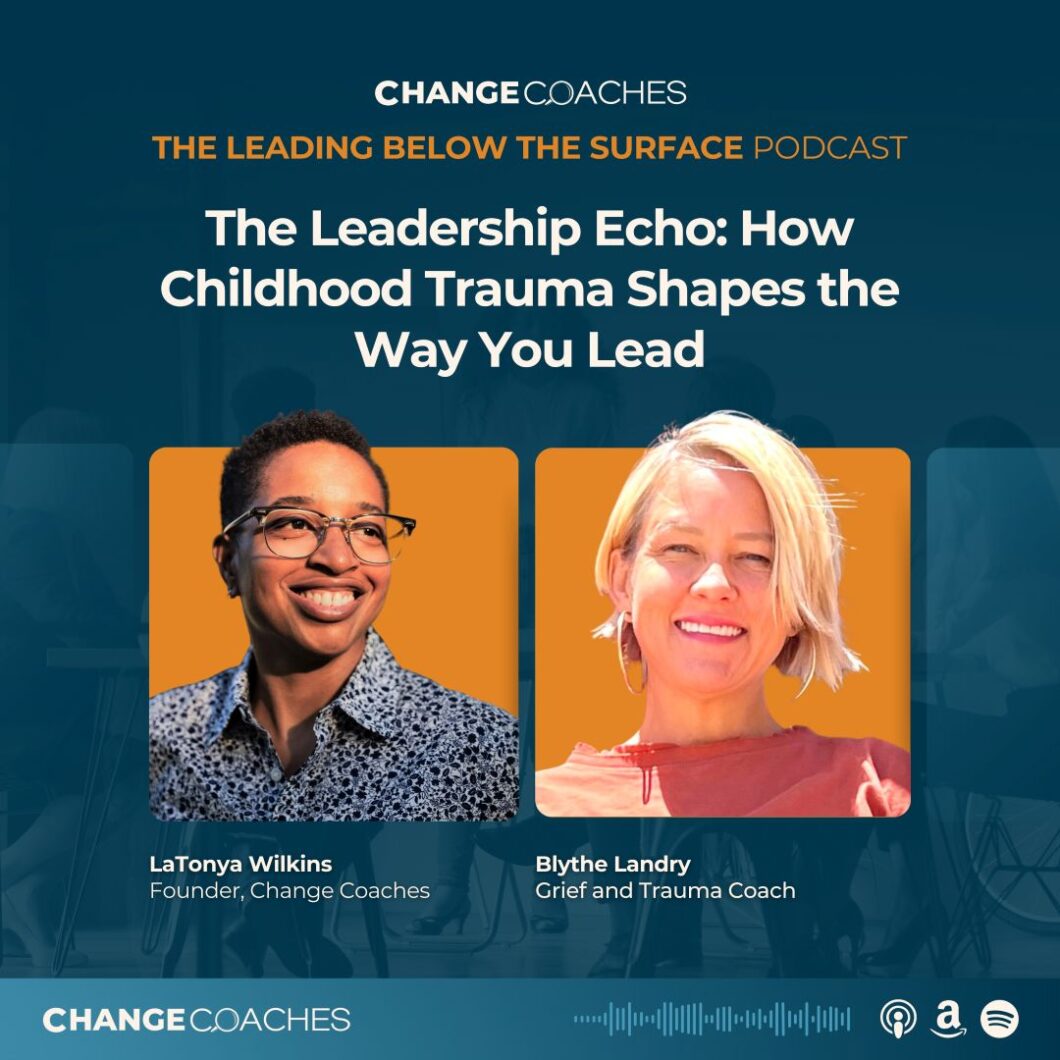
Ep 47: The Leadership Echo: How Childhood Trauma Shapes the Way You Lead

In this episode of Leading Below the Surface, LaTonya Wilkins speaks with trauma coach Blythe Landry about how trauma affects leadership. Discover how unresolved trauma can lead to authoritarian or avoidant leadership styles and what you can do to create a more supportive and effective work environment.


What You’ll Learn:

  • How trauma impacts leadership styles
  • The difference between avoidant and authoritarian leadership
  • Strategies for leaders to address their own trauma
  • How to create a psychologically safe workplace
  • The link between childhood trauma, burnout, and imposter syndrome

Key Discussion Points:

  • Trauma Statistics: Over 60% of adults experience a traumatic event in their lifetime, impacting their leadership and work life.
  • Leadership Styles: Unresolved trauma can lead to authoritarian or avoidant leadership, affecting team performance.
  • Emotional Intelligence: Leaders with high emotional intelligence create teams that outperform others by 20-30%.
  • Childhood Trauma: Linked to increased workplace burnout and imposter syndrome.

Actionable Steps for Leaders:

  • Seek Help: If you recognize traits of avoidant or authoritarian leadership in yourself, seek professional help.
  • Self-Awareness: Understand how your past trauma influences your behavior and responses.
  • Vulnerability: Be open with your team about your journey to create a more trusting environment.
  • Mindfulness Practices: Incorporate meditation and energy work to manage stress and improve emotional regulation.

Resources from Today’s Episode:


Connect with LaTonya and Change Coaches:

And, if you loved this episode, please rate and share it!


Transcript:

00:00:01 – LaTonya Wilkins Hey folks, Latanya here. I am so excited to tell you about a new offering that we have here at Change Coaches. Last year, I decided to get an ICF coach training certification for Change Coaches. Woohoo. We have that, and our first program we are launching is Coaching Below the Surface.

What is this program? Who is it for? It’s for experienced leaders who do coaching in their role. It’s for coaches who are credentialed already and want to do continuing education to renew their credentials. It’s for people that are coach curious. What will it help you do? It’s going to help us relate to people around us better. Did you know that Gen Z is rising, and relating to Gen Z has been one of the number one leadership issues that our clients talk about.

Disability and neurodivergence are big workplace issues, and identities are becoming more multidimensional. What does this mean? How will Coaching Below the Surface help you? It’ll help you because you get ICF coach credits, and we will be in a cohort-type environment where you can learn about psychological safety, belonging, and coaching joy in coaching, and how to think differently about our client bases. What will this get you? It’ll get you more clients, make you a better coach, and get you better ratings as a coach.

It will bring you up to speed with today’s workplace. For those of you who are interested, there is a link in the show notes, so please join our waitlist. If you have any questions, you can email us at info@changecoaches.io. Hello everyone, and welcome to the Leading Below the Surface podcast. I’m LaTonya Wilkins, your host, executive coach, founder, and CEO of Change Coaches, and author of Leading Below the Surface. Today, I have a repeat guest with us, and I’ll tell you the reason why I asked this guest to come back, and we will be having a conversation and so let me tell you a little bit about why I asked this guest to come back.

00:02:13 – LaTonya Wilkins We are recording this episode in February of 2025, and if you are in the US, you are very close to some big changes that we’ve seen in the world in the political and business environment. We’ve been seeing all these changes. By the time this episode is released, it’ll change. There’ll be different things, but there’s just been a lot going on, and it’s not just politically. There’s this ripple effect, and it’s affecting all of us in our leadership making decisions.

00:02:55 – LaTonya Wilkins And it’s just been very tough for people, so I invited my good friend Blythe Landry, who is a trauma coach. She does all kinds of things, like trauma coaching and speaking. She’s a licensed therapist.

00:03:10 – LaTonya Wilkins She is amazing, and I’m really excited to bring her in. We’re going to talk a little bit about trauma and how it affects how we lead. If you are someone that is going through this right now, you don’t have to be in the C suite or a senior leader.

00:03:35 – LaTonya Wilkins If you’re leading right now and you’re wondering why it’s hard for you, why you keep getting stopped, or why maybe you’re not leading in the way you want to, this episode is for you. If this isn’t you and you know someone that is in this situation, pass this on because this episode is for them, and they will truly thank you. Before I introduce Blythe fully, there are a couple of stats that we’ll be talking about.

00:04:10 – LaTonya Wilkins The first one is over 60% of adults report experiencing at least one traumatic event in their lifetime, which Blythe is nodding her head because we do. A lot of times we think this is going to be left at home, but it’s not. I’ve seen this over the last couple weeks here at change coaches. Nearly 70% of employees believe their leaders don’t handle stress well, and I’ll be vulnerable.

00:04:42 – LaTonya Wilkins I’ve been told that by my team, so it’s understanding that and being open to that feedback and understanding the why behind it and how to shift that. This one is really interesting because I think we’re seeing this one playing out. Number three, leaders with unresolved trauma are more likely to default to authoritarian or avoidant leadership styles. That is a lot.

00:05:12 – LaTonya Wilkins Avoidant people are really hard and challenging for me to deal with, and Blythe and I will get into that and leadership. The last one that I will actually, there’s five, so I’m going to share all of them. Four is leaders with high emotional intelligence create teams that outperform others by 20 to 30%.

00:05:36 – LaTonya Wilkins Understanding yourself, self-awareness. The last one, Blythe, you’re going to love this one, but childhood trauma is linked to increased levels of workplace burnout and imposter syndrome. I can tell you that my journey on working through all that stuff, yes, this is very true.

00:05:58 – LaTonya Wilkins I would be burnt out and spinning my wheels, going back to something in my childhood. Let me introduce Blythe, a good friend of mine who wrote Trauma Intelligence.

00:06:19 – LaTonya Wilkins She coaches, is a therapist, speaks, and has worked with amazing organizations. Welcome, Blythe. What did I leave out?

00:06:27 – Blythe Landry Nothing, other than I do trauma and grief work, which are often commingled. You did a great job introducing me.

00:06:36 – LaTonya Wilkins Tell us what you’re excited about right now.

00:06:39 – Blythe Landry I moved to Pennsylvania a year ago, a big change for my partner and me, but I’ve integrated with her family. I have five step-grandchildren now, which I never saw coming. I am a childless grandparent, which is amazing. I’m obsessed with my dogs. I have two awesome dogs, and one just had surgery.

00:07:04 – Blythe Landry I’ve created a program for people who have experienced grief and trauma. It teaches them to take their pain and turn it into a purpose. We know that while we cannot control what befalls us, we have a choice in how we respond. I’m super excited about this program.

00:07:29 – Blythe Landry I’m training people to be trauma-informed grief coaches and couldn’t be prouder of the community. That’s what I’m most excited about.

00:07:38 – LaTonya Wilkins I’ll leave that link in the show notes. I might even do that with Blythe because she’s one of the best. I’ve been able to watch Blythe, and it’s interesting because I love and talk about the book Let Them a lot.

00:07:58 – LaTonya Wilkins I liked that book and just finished it. When I think about Blythe moving to Pennsylvania and having this new life, her book talks about friendships and how they change, and you let them be happy for them. I used to be scared, thinking she was going to disappear. This is one of those things where you let them grow and thrive.

00:08:28 – LaTonya Wilkins It’s been fun to see that with you, Blythe.

00:08:31 – Blythe Landry I love that. I just finished that audiobook yesterday, Let them. At the end of the book, she’s talking about the workplace and how we bring our childhood into the workplace. That book is outstanding. I love that piece about friendship and work as well.

00:08:52 – LaTonya Wilkins You talk about these grief coaches, the therapy, and the coaching you do. How many leaders or people come to you around leadership? How aware are people of their trauma and how it’s affecting them in day-to-day life?

00:09:18 – Blythe Landry This is an interesting, small percentage of the population. Everyone that comes to me has had grief and trauma and is looking specifically to turn it into a purpose. This population is very conscious of what’s going on with them.

00:09:36 – Blythe Landry Looking at the larger world, we’re not taught how trauma applies to every area of our lives. How we grow up informs everything going forward. It informs how we think, feel, and respond. You shared vulnerably about yourself, how we respond to stress, the environment, and how we perceive the world.

00:10:09 – Blythe Landry Even if we don’t think certain things that happened in childhood, like abuse, neglect, or growing up in a home with addiction, informed our behaviors, it absolutely does. Even if we’re not reacting to those past things intentionally in the present, how we perceive the people before us informs how we respond. If I grow up with a very fearful view of authority figures and I work in an environment where someone looks or sounds like them, or even suggests that I might need to improve on something, I may take that as an ultimate attack and be unable to receive that information.

00:10:54 – Blythe Landry If I am C suite, one of the largest leaders, and I was raised to feel like nothing I ever did was good enough, and I have a star on my team, instead of feeding that, supporting them, and helping nurture their development, I might subtly or overtly minimize them or reject them. I might be so insecure, regardless of my status, that I don’t support my team member and I hurt them so that I look bigger or more powerful than they do. Those are things that happen every day in the workplace.

00:11:34 – Blythe Landry I’ve had a boss like that, and it’s a horrible thing to experience. I can’t emphasize enough the importance not to shame yourself, but to really be aware of how people feel around you and the thoughts and the feelings that are going on inside in relationship to your team, because these relationships are a direct reflection of what you perceive about the world, of what you perself and what you perceive about what you can and cannot hanger in the world.

00:12:04 – LaTonya Wilkins That’s interesting how you might just ignore something or evade something. The way you respond is based on your history. We do a lot of workshops on resilience, and one of the things that often comes up is people find it hard to have empathy for people that are upset that they didn’t get Taylor Swift tickets or their favorite pair of Nike sneakers.

00:12:50 – LaTonya Wilkins I want to talk about what is a traumatic event and how should we be thinking about that? I wonder why I’m asking this. We’re in an interesting place in the world, and I think some of it is people can’t have empathy for each other. What is a traumatic event, and is that defined?

00:13:24 – LaTonya Wilkins Who defines that?

00:13:25 – Blythe Landry I want to distinguish between a traumatic event and traumatic experiences, like long-term experiences. A traumatic event is something in which the person feels unsafe, out of control, in danger, terrified, or surprised in a way that is very scary or painful.

00:13:48 – Blythe Landry If I’m looking at childhood, I’m looking at neglect, abuse, sexual molestation, feeling like nothing I ever do is good enough, constantly being yelled at, constantly getting mixed messages. Those are traumatic events, and constantly getting mixed messages bleeds over into traumatic experiences. There’s a one-time event, and then there are things that go on over and over. That’s where I’m getting that complex post-traumatic stress disorder piece where people are always in a fight or flight mode based on how they were raised. In terms of adulthood, a traumatic event is something big.

00:14:39 – Blythe Landry Something like a car accident, seeing something violent, experiencing a traumatic loss of somebody due to a car accident, murder, or something like that. Having a family member incarcerated, witnessing someone you love passed away and walking in on that. Traumatic events are a big deal. It’s all relative because based on how I perceive the world, how I grew up, and my understanding of what is hard and not hard, I may perceive something as much more catastrophic than someone else who has had a lot of trauma.

00:15:26 – Blythe Landry Someone might think something I think is catastrophic is not that bad. But to your point about getting Taylor Swift tickets or sneakers, that is not a traumatic event. It didn’t cause the person a lack of safety, security, or ability to choose if they were in or out of a situation. But if someone is looking for why they can’t have empathy for that, perhaps look at the thing in the person that you can relate to. Find something about that person that you like, that you find compassion for, and relate to them from that event. Let’s say I had a lot of trauma, and my trauma was, let’s say I grew up in an attic home where there was always disappointment. Maybe in my mind, going to that concert is something I really want, and I am disappointed that I didn’t get tickets. A lot of people with trauma also look at things that are disappointing as despairing events.

00:16:31 – Blythe Landry Because they feel like it’s just another disappointment. So that’s another way that you can relate to someone. If you’re not having that empathy, be like, in context, this was just another disappointment for them.

00:16:43 – LaTonya Wilkins It’s like that saying, what you’re reacting to is not what’s going on right now, maybe it was going on 10 years ago. I’d love to hear what you think of the phrase collective trauma. I wonder if we all are experiencing that because the world’s getting harder.

00:17:08 – LaTonya Wilkins I wonder if Taylor Swift tickets might be related to what you said, it’s additive.

00:17:20 – Blythe Landry I remember one time when I was in my 20s and my life was falling apart. I was getting divorced, moving out, and changing everything. I had a new job, which is not traumatic, but it’s another change.

00:17:43 – Blythe Landry I was at a restaurant I frequented because one of my trauma responses is to have rigid routines that are familiar, which is not uncommon for people with trauma. I was at dinner, and they were out of the bread I always got there. Tears streamed down my face. One might think that’s insane, but I just wanted to find something familiar.

00:18:15 – Blythe Landry Everything in my life was not going the way I wanted, and this was a metaphor for everything in my life. Was I overreacting? No, not if you look at the whole context of my life at that time. But to someone who didn’t know my life situation, that would have been ridiculous.

00:18:40 – LaTonya Wilkins I didn’t mean to laugh at you. I was laughing because now you’ve taught me something.

00:18:45 – LaTonya Wilkins I went to a sound bath a couple weeks ago, and there was a woman there. It’s snowing in Chicago, it’s freezing, and she refused to take her shoes off. She was yelling at the instructor.

00:19:12 – LaTonya Wilkins It was going to be wet for us, and it probably wasn’t going to be a good experience for her, but he ended up letting her keep her shoes on. I felt bad for him because of the way that she was reacting.

00:19:27 – Blythe Landry Maybe she was just not a nice person. Maybe her spouse had just had an affair, her child had gotten a DUI, and there was this confluence of events that made her really get obsessed with something irrelevant.

00:19:43 – LaTonya Wilkins Yeah.

00:19:43 – Blythe Landry We don’t know.

00:19:44 – LaTonya Wilkins I was really trying not to say anything, but I was like, wow, this guy is making this event for us and she’s behaving this way.

00:19:56 – Blythe Landry Depending on his experience, that could have been traumatic for him.

00:19:59 – LaTonya Wilkins Yeah, probably. I think he was trying to get in his flow. He had a room full of people.

00:20:08 – LaTonya Wilkins It was really nice. That’s been a big solace for me. I’m really happy to live in Chicago because there’s so much and it’s diverse.

00:20:20 – LaTonya Wilkins The third thing I want to talk about, I’m an attachment styles nerd. I read these books. I’m really into them. The third one is that leaders with unresolved trauma are more likely to default to authoritarian or avoidant leadership styles.

00:20:42 – LaTonya Wilkins What is an avoidant leadership style? How does that compare to being avoidant in a relationship in any relation, not just romantic, but friendships as well?

00:20:53 – Blythe Landry How we do one thing is typically how we do everything. If I’m an avoidant leader, I’m someone who doesn’t like to have conflict, that has any emotion involved, which is hard to do when you’ve been working with someone for a long time or you’re there every day, all day. There can be a coldness in resolving conflict or bringing information to someone. Let’s say somebody comes to your office and they’re overly emotional about something going on in their life, and you’re trying to talk to them about work. You could be very dismissive. You could be very repulsed by that behavior.

00:21:29 – Blythe Landry Someone who’s avoidant is terrified of being consumed. On the flip side of that, they’re also afraid of abandonment. Things that seem unnecessarily emotional, things that seem inefficient.

00:21:45 – Blythe Landry Things that seem less work-focused and more relational can trigger someone avoidant. Avoidant attachers have trauma and often grew up with neglect, being ignored, or inconsistent parenting, so these things feel like threats.

00:22:09 – Blythe Landry It’s not something you can change by noticing; you must work on it through deep personal, professional help. Avoidants tend to get their needs met outside relationships.

00:22:28 – Blythe Landry Achievement, work, busyness, athleticism, and travel do not require deep emotional bonds. They crave emotional bonds, but once they’re in it, they don’t like it until worked on. The flip side is someone with an anxious attachment style.

00:22:52 – Blythe Landry They’d constantly seek reassurance from their supervisor or team, overworking to make everybody comfortable so people love them, over-giving, and having their team walk all over them. Both avoidant and anxious attachment styles can cause problems in work environments and are trauma responses.

00:23:16 – LaTonya Wilkins Thank you for talking about anxious too. But what makes an avoidant leader authoritarian?

00:23:23 – Blythe Landry Those are two separate responses. Authoritarian leadership, like how Trump is leaning.

00:23:32 – Blythe Landry It’s well known that he grew up with trauma, an extreme amount of trauma. So, I’m in charge, no one is more powerful than me, I’m going to take over everything.

00:23:45 – Blythe Landry I am the biggest person in the room. I give no one a choice. It’s a deep sense of insecurity and immature emotional immaturity and a desire to never feel small or vulnerable or take accountability, which can also be a major trauma response.

00:24:08 – Blythe Landry When you get into personality disorders, being avoidant doesn’t make you have a personality disorder. Being authoritarian absolutely does. Then you’re looking into other mental illnesses that cause that behavior.

00:24:27 – LaTonya Wilkins It’s interesting with being authoritarian and having trauma. And then you said with avoidance is getting everything fulfilled outside of work?

00:24:40 – Blythe Landry No, outside of relationships.

00:24:42 – LaTonya Wilkins Outside of the relationship, outside of the team.

Ep 46: 8 Keys to Developing a Next-Level Leadership Mindset

Is your mindset feeling off, but you don’t really know why? In this episode, LaTonya Wilkins shares 8 actionable ways to upgrade your leadership mindset and thrive in today’s rapidly changing world. She dives into the importance of self-awareness and emotional intelligence, exploring how recognizing triggers and managing emotions can guide decisions and improve relationships.

LaTonya also discusses the significance of cultivating a growth mindset and building resilience in the face of uncertainty. By sharing personal stories and practical strategies, she aims to help listeners adapt to change and lead with calm and clarity. Throughout the episode, she emphasizes the importance of trusting oneself and making confident decisions while fostering a sense of purpose and committing to long-term success.

Join LaTonya as she navigates the complexities of leadership in today’s times. Whether you are looking to enhance your well-being or improve your leadership skills, this episode is packed with insights that can transform their mindset. For more resources, visit changecoaches.io or email info@changecoaches.io.


Resources from Today’s Episode:


Connect with LaTonya and Change Coaches:

And, if you loved this episode, please rate and share it!


Transcript:

00:00:01 – LaTonya Wilkins Are you looking to get a head start on first quarter? Here at Change Coaches, we prepare people to lead in today’s workplace through leadership and organizational coaching. This ranges from one-on-one executive coaching to group coaching related to certain competencies for middle managers. We also offer keynotes based on the Leading Below the Surface book. Our most exciting offering is empathy-based sales training. We will develop and train your sales team to bring in more sales and connections with customers.

00:00:41 – LaTonya Wilkins To learn more, visit changecoaches.io or email info@changecoaches.io. Hello everyone, and welcome to the Leading Below the Surface podcast. I’m your host, LaTonya Wilkins, award-winning executive coach and author of Leading Below the Surface. Before we get started, if you enjoy this podcast, please share it with others. Also, like and subscribe.

00:01:10 – LaTonya Wilkins I ask you to do this for a couple of reasons. Number one, we’re the new kids on the block here on YouTube, so we’re trying to connect with more people, especially if the message resonates. Second, who wouldn’t be thrilled if you sent them today’s content, especially about preparing your leadership mindset and bringing it up to date? Today, I’m going to share with you eight ways to bring your mindset up to today’s times. I’m doing this episode and sharing these eight tips because I’ve had so many people ask me how I’m doing.

00:01:52 – LaTonya Wilkins You seem to be doing well, and I want a little bit of that. I always tell them it’s not as easy as you think.

00:02:03 – LaTonya Wilkins I’ve been working on getting my mindset right for today’s times for years. If you listen to today’s episode, congratulations, that’s the first step. But there are many other steps to this process. There’s practice, and there’s doing some.

00:02:25 – LaTonya Wilkins I would do peer coaching with other people to move more towards that. There’s also just taking that step to stop yourself when you are going into old behaviors. I’ll talk a little bit about that today. So, eight steps to upgrade your leadership mindset to today’s times. A couple of things.

00:02:47 – LaTonya Wilkins If you’re new to this podcast and community, know that my tips are deeper and more coachy than others. This podcast is about depth and building real change.

00:03:17 – LaTonya Wilkins It’s about building real change in yourself, your organization, and others. I’m offering eight tips today, starting with embracing self-awareness and reflection. Self-awareness is sometimes used punitively, but when self-directed, it’s one of the best things you can do.

00:04:04 – LaTonya Wilkins It’s uncomfortable, especially if done right, and hard to regulate. Self-regulation goes hand in hand with self-awareness.

00:04:25 – LaTonya Wilkins It’s like a coin: self-awareness on one side and self-regulation on the other. I had awareness of who I was.

00:04:52 – LaTonya Wilkins For example, I knew what triggered me and the types of people I didn’t like. If someone seemed slippery or untruthful, it used to upset me, and I’d try to pull them to my side.

00:05:29 – LaTonya Wilkins I first had to acknowledge that’s what I was doing. That’s the self-awareness piece, and the other side is self-regulation. Self-awareness is a game changer; it’s not just awareness itself.

00:05:50 – LaTonya Wilkins It’s like the other side of the coin that is the regulation. One of the things that I stopped doing last year, I got the awareness that, let’s stay with that example. The types of people like these slippery people, these people that only talk to you because they want something or they’re not really reliable, they don’t really respond to you.

00:06:17 – LaTonya Wilkins I don’t like that. I’m a person that likes concrete. If you’re not interested, just tell me, or if you’re not going to operate to your word, just tell me. I started doing self regulation, so with those people, it was fine.

00:06:38 – LaTonya Wilkins I just stopped trying to push, and I realized that that was a tendency, that I would go harder instead of pulling away. Some of you may pull away, some of you may go harder, and maybe for some of you, that’s not an issue that you have. To end this tip in this section, everyone take a minute.

00:06:57 – LaTonya Wilkins I encourage you to take a minute and jot down on a piece of paper. Get out of pen and pad as we’re going through this and jot down on that piece of paper. What are some things that you know about yourself, those things about yourself that are triggering, that make your nervous system go wild? We’ll get into more of those things later with more tips, but what are those things? Just having awareness about it, not judging yourself. For me, I was like, oh, my gosh, I shouldn’t let these people bother me this much.

00:07:26 – LaTonya Wilkins It’s not about that. It’s about knowing that that’s something. I will end this because, in this first tip with, I’m reading this book called Attached that it’s all about attachment styles and romantic relationships. I highly recommend it.

00:07:41 – LaTonya Wilkins It’s great. It’s providing me with so many insights, not just into potential romantic partners, but also into how I respond in friendships and intimate relationships and anything really close. One of the things he talks about in the book is sometimes we judge ourselves and we think, oh, my God, it’s bad to care too much. It’s bad to get your feelings hurt. It’s bad to want to be interdependent.

00:08:12 – LaTonya Wilkins It’s not. It’s just you. It’s just you who you are, it’s bad to be emotional. It’s not. It’s you who you are.

00:08:19 – LaTonya Wilkins Knowing yourself again in that flip of the coin, the self regulation, it’s really just to get you out of that situation. Not’s self preservation. It’s not to discontinue that part of yourself. Number one, embracing self awareness and reflection, remembering that coin, on one side is self awareness, on the other side of that coin is self regulation.

00:08:47 – LaTonya Wilkins Okay, number two, another word we hear a lot. I interviewed Farah Harris on an episode in season two of this podcast. You can listen to my interview with Farah; she wrote a book called the Color of Emotional Intelligence. What do I mean by cultivating emotional intelligence? This goes with number one, self-awareness. These two are intertwined.

00:09:29 – LaTonya Wilkins When I’m practicing emotional intelligence, I’m opening up my intuition and trusting it. Let’s go back to the example I gave you in number one. I talked about people that trigger me. Emotional intelligence tells me that person’s triggering me, and if I’m leaning into that, it tells me what my next step should be.

00:10:00 – LaTonya Wilkins Maybe that step or what the right next step is. For me, that next step might be ending that conversation, stepping out of that conversation, or taking the conversation in a different direction.

00:10:17 – LaTonya Wilkins Some of you are probably thinking, I don’t know how to access EQ. I think the first thing, there’s three ways: empathy, and then listening below the surface. I talk about P2P and P2B listening. If you could step back and do those types of listening, then your brain slows down, and you could connect with other people.

00:10:38 – LaTonya Wilkins You could connect, you could plug into that emotional intelligence, managing your emotions. If you know you’re emotional, like I talked about in number one, just knowing that and then managing that again, that other side of the coin, that is the regulation. With emotional intelligence, if your intuition is telling you that something is the case, that probably is the case. A lot of times with relationships, with jobs, with clients, when I get into conflict or when things go south, it’s because I’m not trusting that intuition. I’m not creating space for that intuition.

00:11:24 – LaTonya Wilkins I’m not creating space for that emotional intelligence to give me the information that I need to use to turn that compass on and be able to effectively navigate that relationship. So number one, self-awareness. Number two, EQ. Those two are related. Number three.

00:11:48 – LaTonya Wilkins I know we get sick of hearing about growth mindsets. When the growth mindset book was out, there’s a fixed mindset, growth mindset. I don’t think it’s necessarily a dichotomy. I think you could be in the middle. Let’s talk a little bit about being in the middle and the actual growth mindset.

00:12:16 – LaTonya Wilkins What I mean by being in the middle of fixed to growth is that you might have a fixed mindset about some things. One example I can use is a client whose kid is going to college in the fall. Her fixed mindset was that her kid had to study a certain field and go to a certain school; otherwise, the kid wouldn’t be successful.

00:12:53 – LaTonya Wilkins That was very fixed, something this person really believed and wanted, as that’s how they were raised. That’s what they thought should happen. But as we were talking and doing coaching, her mindset started moving towards growth. It wasn’t all the way in growth, but it started with realizing the field of study could be different, and maybe there’s a different path.

00:13:30 – LaTonya Wilkins She started realizing that until she finally shifted into growth. The big thing is, don’t think it’s either fixed or growth. It’s not that. The other thing I want to share about growth mindset is what if there’s a lot going on in the USA right now? I’m recording this episode in March of 2025.

00:13:55 – LaTonya Wilkins There’s a lot going on in the US government and around the world. I used to deal with things differently, thinking, “Oh no, this is bad. This is going to affect me. It’s horrible.”

00:14:12 – LaTonya Wilkins But now, with the growth mindset I’m in, it’s funny because I don’t get as nervous anymore. I don’t get as doom and gloom. I’m like, “Wow, what can I use? How can I learn from this situation? How can I create? How could I be a resource to clients? How can I see this challenge as an opportunity? How can I create to step up to today’s time?” So, that’s what I mean by growth mindset. Last year, we launched an assessment.

00:14:52 – LaTonya Wilkins Last year, we launched an assessment as a growth mindset. When it launched, it didn’t do as well as I wanted it to. I thought it was going to be this B to C assessment where individuals would come to us and want to do this assessment on their own, but that never surfaced. I’m just going to be honest.

00:15:16 – LaTonya Wilkins Surface corporations are using the assessment as a cohort tool. It’s also become a big part of change coaches, and we’re using it for our coaching below the Surface program. This required a growth mindset. A couple of years ago, I would have considered it a failure and wouldn’t have used it.

00:15:41 – LaTonya Wilkins We figured out who the actual customer was, and the growth mindset helped me see that the way we set this up wasn’t right. I needed to add psychological safety and belonging to every assessment. We had two different assessments.

00:16:04 – LaTonya Wilkins One was individual, and the other was a 180 assessment. Nobody knew what a 180 assessment was, which upset me. But I used it as a growth opportunity.

00:16:16 – LaTonya Wilkins I used my growth mindset, relaunched it, and it worked really well. Think about a problem you’re having right now. If you’re stuck in a negative mindset, how would a growth mindset help you? Instead of thinking, “I posted this and nobody signed up,” or “I launched this program, and nobody signed up,” or “My business isn’t growing at the rate I want it to,” or “My career isn’t growing at the rate I want,” or “I’ve been looking for a job for two months, and it’s not working,” how can you lean into that growth mindset?

00:16:59 – LaTonya Wilkins I’m not saying pull yourself up by your bootstraps, but the world’s changing. We’re recording this in March 2025, and it will continue to change. How do you grow with that, whether or not you like how it’s changing? This is what we have to adapt to.

00:17:23 – LaTonya Wilkins Number four is building resilience and adaptability. I talk a lot about resilience. I did a podcast on resilience a couple of months ago, so check that one out. I talked about the 10 influencers of resilience. Demographic information, how you were raised, and all these things determine who thrives in uncertainty and who doesn’t.

00:18:00 – LaTonya Wilkins But that doesn’t mean that you can’t cultivate this. It’s interesting because some clients ask why we have to be resilient, questioning why the world can’t just be better. I wish we could have both.

00:18:24 – LaTonya Wilkins I discuss this in keynotes, mentioning animals and bees. I talk about how bees are resilient with climate change and adapt to different roles within their colony. Our colony doesn’t look the same, so how do we adapt to that? How do you get through the world changing? When AI first came out, I was upset because I felt threatened.

00:19:13 – LaTonya Wilkins Then I adapted to it. Today, I use some sort of AI every day. It doesn’t replace my job; it makes me a better coach and CEO. So think about that.

00:19:29 – LaTonya Wilkins How do you build resilience? How do you build the staying power to continue doing what you do, and how do you adapt? Going back to that staying power, taking time for yourself, strategizing, and self-care is important. I’ve started adding different trips to my self-care. Thinking about what’s important for you and how you can build that resilience and come back, sometimes it’s mindfulness. Some may do religion, spirituality, or spiritual things; it’s all about that. I just had a session with another coach yesterday, and we went through a bunch of my astrology charts. There are all these different ways to help you be resilient, using those tools to adapt and build staying power in the world.

00:20:46 – LaTonya Wilkins Number five, leading with calm and clarity. This is not easy. I’m not going to lecture you and say you need to be calmer. It’s not about that, but think about what makes you calm and how you do that. I often have my clients do the opposite: think about what makes your nervous system go wild.

00:21:15 – LaTonya Wilkins Getting rid of negative things first is an excellent strategy. People usually remember negative things before positive things, which is why I always ask about positive things first in workshops because negative stuff can fill up due to negativity bias.

00:21:35 – LaTonya Wilkins Leading with calm and clarity, the best way to build calm is to remove things that make your nervous system go wild. For me, I did this exercise last year because I knew 2025 would have stressors. One of those things is social media.

00:22:10 – LaTonya Wilkins Some of you might think I’m good on social media, and I am, but I have boundaries. I’ve changed how I use social media, which has been game-changing for my calmness. I’m mainly on social media for business and Substack.

00:22:34 – LaTonya Wilkins I read blogs and don’t like reading things that evoke my emotions. I’ve curated my feeds to avoid being triggered.

00:22:53 – LaTonya Wilkins I get up early to meditate, journal, or go to yoga. Find your calm and clarity time. I read more books instead of wasting time on social media. It’s funny because I.

00:23:33 – LaTonya Wilkins The first time I joined TikTok was two years ago, and I remember going on there and spending an hour just laughing and watching funny videos. As soon as I did that, I knew it wasn’t for me because I thought about how when something hard happened in the world, it would be the opposite, and there would just be too much for me to look at. It’s not that I don’t care, it’s just that I know I’m triggered by certain energies like anger and violence, and I don’t want to see any of that.

00:24:19 – LaTonya Wilkins There’s enough of that anyway that I’m going to be exposed to, so why would I choose it? Again, find your calm and write that down. If you don’t know, jot down those things that make your nervous system go wild. Let’s move on to the next one.

00:24:41 – LaTonya Wilkins Trusting yourself and your decisions is so hard. This is another game-changing one. I talk about the 80/20 rule, and I think 80% of your results will come from trusting yourself and your decisions.

00:25:03 – LaTonya Wilkins What does that mean? Make a decision and move on. I know it’s hard, and I know when leaning below the surface, I talk about all the feedback I used to get to be decisive and hurry up. I’m not saying make quick decisions. I will tell you that I recently made a big life decision, but I won’t get into that decision.

00:25:29 – LaTonya Wilkins I recently made a big life decision, a relationship decision, that was really hard to make. I made that decision over time, and in order for me to make that decision, I had to trust myself, and I had spent years not trusting myself. So I had to figure out how to build trust with myself around my decision. How did I do that? I started jotting down the decisions that I made in my life that were good decisions, how I made those, and what the process was. I emulated that same process. I think when you’re making a major decision, that’s life-changing.

00:26:30 – LaTonya Wilkins It might require a pros and cons list, conversations with friends, or consulting coaches. The number one thing I was ignoring in my decision was my intuition, which goes back to number one and number two.

00:26:55 – LaTonya Wilkins To trust yourself, trust your gut. First impressions aren’t always correct, but if something keeps coming up, trust your decision to walk away. I’ve done that with clients and newer friendships.

00:27:26 – LaTonya Wilkins Maybe we need some breathing room. I have a friendship that’s also a business partnership, and we’re cultivating a wonderful relationship. I’m glad I didn’t trust my first impression because the first time we had conflict, I was unsure.

00:27:47 – LaTonya Wilkins I worked through it because my gut felt it would be good. I wasn’t happy with how the conflict went, but deep down, I believed it was okay.

00:28:00 – LaTonya Wilkins If you’re having a hard time believing yourself, write down the thought. For example, “I don’t think this friendship will work out,” and journal over a month, noting what supports that thought and what doesn’t.

00:28:27 – LaTonya Wilkins It doesn’t have to be just actions; it could be how you’re feeling inside. Trust yourself and your decisions, especially those scary growth decisions. When we launched the assessment, I made that decision.

00:28:49 – LaTonya Wilkins I had to move forward with it, trusting that’s what I wanted to do and keep. I kept it and moved forward. I didn’t regret the decision; it was a learning experience that I continued to move towards.

00:29:06 – LaTonya Wilkins Okay, two more. Number seven: fostering a vision and sense of purpose. This is a big, existential one.

00:29:19 – LaTonya Wilkins This is harder to do and will take multiple steps to figure out. One of the things I did when I started as a change coach was write down my purpose in the world. One of my coaches would talk about impacting billions of people. One person can’t do that, but the ripple effect can. My purpose was to have an impact on all these people.

00:30:03 – LaTonya Wilkins My purpose wasn’t to climb the corporate ladder, make people happy all the time, people-please, or be a big social media influencer. Some may say I am, but that’s not my purpose. That might be something that’s coming, but my purpose is to help people connect across differences.

00:30:36 – LaTonya Wilkins My purpose is to help people grow, lead in today’s times, bring out their talents, and navigate today’s challenges. That’s my purpose. What’s your purpose, and how do you know?

00:30:53 – LaTonya Wilkins I think you start knowing your purpose when you note every time you have an amazing impact. Jot that down, and over a couple of months, you’ll see a running list.

00:31:20 – LaTonya Wilkins That will tell you your values and give you insight into your purpose. Try that. The second thing is to figure out what your currency is. Some may be money-motivated, but maybe some are meaning-motivated.

00:31:39 – LaTonya Wilkins What’s your currency? If you want to be a social media influencer, maybe your currency is the number of followers, but I advise against that. You want it to be something intrinsic, something that makes you feel connected and shows that you’re having an impact on the world. Okay, let’s get to number eight.

00:32:08 – LaTonya Wilkins If you’ve heard something that you really love, please pass this on to others because don’t we need to create more next-level mindsets to navigate the future? This is the grand finale, another age 21, but commit to long-term success. This is about the long game. This week, I met with my financial advisors, thinking about the world today and if we’re going into a recession. As an economics nerd, I know we’re supposed to go into recession next year, but in America, with all these policies moving so quickly, it might be sooner. One thing they said to me is this is about the long game, and how likely am I to pull out if something bad happens?

00:33:12 – LaTonya Wilkins We’re talking about risk tolerance, which is an excellent metaphor for what we’re doing. Let’s talk about three situations: running a business, trying to get further in your career, or doing something personal. If you run a business, ask yourself, what can I do today?

00:33:41 – LaTonya Wilkins What’s an action I can take today where my future self will thank me in my business? It might be launching a new product, investing money, or taking a trip. Think about what that might be, like investing in something at the right time.

00:34:10 – LaTonya Wilkins Maybe there’s an investment at a lower cost right now that you can buy and get some returns. Maybe it’s making a new connection. Job.

00:34:27 – LaTonya Wilkins What decision can I make in my career right now that my future self will thank me for? Maybe you need to leave a job, get further education, learn a new tool, or learn something.

00:34:44 – LaTonya Wilkins Think about how your future self will thank you. What’s something that I can do today in my social life where my future self will thank me? It’s not going to be instant results, but maybe that is signing up for an arts class, or I just recently did a dance class, or maybe it’s something that’s going to build up to something else.

00:35:16 – LaTonya Wilkins Maybe it’s joining a new gym or a new yoga studio, or just dabbling in those studios. It’s not all or nothing. What is that going to look like today? Maybe I block off every Friday and have creative Fridays, which is something that I’ve recently done, like no client Mondays. What are those things that I can do? Today, I talked about eight different ways to create a next level leadership mindset. I’ll go back through those eight, and then we’ll close out.

00:35:51 – LaTonya Wilkins Embracing self awareness, cultivating emotional intelligence, developing a growth mindset, building resilience and adaptability, leading with calm and clarity, trusting myself and my decisions, fostering a vision and a sense of purpose, and committing to long term success. Thank you, folks, and we’ll see you next time.

Ep 45: Navigating Life’s Surprises with Confidence: Stories and Strategies from Change Coaches

Join me, LaTonya Wilkins, on the Leading Below the Surface podcast as I chat with Sabrina Creighton, a Change Coaches Coach partner, about navigating unexpected life changes, including divorce and personal growth. In this episode, we delve into the challenges of dealing with grief, managing transitions, and the importance of community support. We share personal stories, tools, and resources to help you thrive and find resilience, no matter what life throws your way.


In this episode, Sabrina and I discuss:

  • Dealing with loss and grief
  • Working through childhood traumas
  • The impact of divorce on personal identity
  • The importance of community and support systems
  • Redesignating your life after major shifts
  • Empathizing with yourself and practicing self-care
  • Pruning relationships and focusing on your roots

Quotes:

Sabrina Creighton: For me personally, it’s the first time that I haven’t had storms raging inside of me. There’s always going to be storms raging outside, but inside of me is a calm nervous system.

Context: Sabrina shares that she feels like she is living her best life because she has finally found inner peace, despite the chaos that may be happening around her.

Sabrina Creighton: I cannot take on all of the problems that are external and bring them into my personal space because I just can’t live like that. I can’t exist like that. There’s always the ability to recognize what is going right for you, to recognize that you have options even when it seems like you don’t have any. You’ve always got yourself.

Context: Sabrina emphasizes the importance of protecting one’s inner peace by not internalizing external problems and remembering the power of self-reliance.

Sabrina Creighton: My mother not one time in two years of being sick ever said, why me? She actually said the opposite. She said, why not me? Why can’t I be a blessing to other people through my illness, through my challenges?

Context: Sabrina shares her mother’s inspiring perspective during her illness, focusing on being a blessing to others rather than questioning her own suffering.

Sabrina Creighton: What divorce did for me was it gave me a clean blank slate with which to create a life that was filled with the things that I valued and the things that I wanted.

Context: Sabrina reframes her divorce as an opportunity to create a life aligned with her values and desires, rather than viewing it as a разрушение.

Sabrina Creighton: I had this room and I just started putting furniture in it with other people’s things on it… and then somebody came in and just knocked that whole bookshelf over. And then I realized that there was a door behind it.

Context: Sabrina uses the metaphor of a bookshelf to describe how she prioritized others’ needs and desires over her own, and how a разрушение (like her divorce) revealed new opportunities and possibilities.

Sabrina Creighton: Do not be afraid to lose the things that you cannot keep, to keep the things that you cannot afford to lose.

Context: Sabrina shares advice from her godfather about the importance of pruning away things that are not sustainable in order to protect what is truly essential.

Sabrina Creighton: Sometimes you have to prune your community… I can’t have people in my circle… that are killing my tree.

Context: Sabrina emphasizes the need to protect one’s well-being by removing toxic or negative influences from one’s community and relationships.

Sabrina Creighton: You remember who you are. You are fearfully and wonderfully made. You are Sabrina. You have so much to offer, and nobody is going to hold you back from that.

Context: Sabrina shares her mother’s empowering message about self-worth and potential, which she carries with her every day.


Resources mentioned:

  • Book: Necessary Endings by Henry Cloud
  • Book: Conscious Uncoupling by Katherine Woodward Thomas
  • Book: Let Them by Mel Robbins

Connect with Sabrina:


Connect with LaTonya and Change Coaches:

If you found this episode helpful, please share it with others and rate us on your favorite podcast app! Thank you for listening!


Transcript:

A: LaTonya Wilkins

B: Sabrina Creighton

00:00:01 – A Are you looking to get a head start on first quarter? Here at Change Coaches, we prepare people to lead in today’s workplace, offering leadership and organizational coaching, from one-on-one executive coaching to group coaching related to competencies for middle managers. We also offer keynotes based on the Leading Below the Surface book. Our most exciting offering is empathy-based sales training to develop and train your sales team, bring in more sales, and create more connections with customers. To learn more, visit changecoaches.io or email info@changecoaches.io

00:00:48 – A Hello everyone, and welcome to the Leading Below the Surface podcast. I’m your host, LaTonya Wilkins. Today, we’re digging into an episode that I think you’ll all love. You are probably going through life changes, expected or unexpected, chosen or not, and we’re going to be talking about those unexpected life changes.

00:01:20 – A Before I introduce my guest, let me talk about who this episode is for and what we will provide. We’re going to share stories about unexpected events in our lives and then get into some tools and resources. We’re not going to leave you hanging.

00:01:43 – A We’re not going to do that today. As you can see, my guest and I are laughing together on YouTube. Our guest today is Sabrina Creighton. I’m lucky to call her one of our change coaches and partner coaches.

00:02:00 – A I refer people to her quite a bit, especially those looking for a coach for the first time. She’s been amazing. People who don’t know what they want, I recommend Sabrina. It’s been great. She did some design your life training.

00:02:21 – A She runs coach communities and has a long background in corporate leadership development, learning, and development. Sabrina, I’m excited to have you here. What did I miss about you?

00:02:36 – B You didn’t miss anything, LaTonya. Actually, you made me sound a little bit better than I probably really written myself. But no, I’m just so excited to be here with you and just to talk to you again.

00:02:47 – A Congratulations on the Journal Company. I know we’ve talked about this a couple of times, and that’s the way to get it is to have something that’s out there and people can always discover it and discover you also helping people in the world. It’s funny because I was in a conversation with you the other day and you said that this is the best time of your life. Can you say more about that?

00:03:06 – A Because other people are like, I don’t hear that all the time. Especially again, we’re in a transition. I call it a transition period. We don’t know what’s on the other side of the transition.

00:03:19 – A What makes you say that about your life right now?

00:03:23 – B I love that. I think that’s a great question. Right now I’m working on a passion project that’s really close to my heart. I’m working on launching my Journal company, and this is really exciting to me because I feel like it’s a space where I can combine all of the things I’m good at at work, all of the things that I feel like I’m good at in my personal life, and then what I offer to my clients.

00:03:48 – B It’s all wrapped up in a little bundle in this project, and I’m just super excited about it. I have a lot of energy around it. I have a lot of positive emotions around it, and it just feels like it’s coming at a place where I am living my best life.

00:04:02 – B I don’t know how I got here, but it’s just giving me a lot of energy right now. I’m just trying to absorb all of the wonderful things coming at me.

00:04:12 – A Congratulations on the Journal Company. I know we’ve talked about this a couple of times, and that’s the way to get is to have something that’s out there and people can always discover it and discover you also helping people in the world. It’s funny because I was in a conversation with you the other day and you said that this is the best time of your life. Can you say more about that?

00:04:31 – A Because other people are like, I don’t hear that all the time. Especially again, we’re in a transition. I call it a transition period. We don’t know what’s on the other side of the transition, but what makes you say that about your life right now?

00:04:48 – B Yeah, it’s interesting because it feels odd to say this is the best time of my life, and then I look out the window and it’s terrible. The reason why this is the best time of my life is because, for me personally, it’s the first time that I haven’t had storms raging inside of me. There’s always going to be storms raging outside, but inside of me is a calm nervous system.

00:05:29 – B This is the first time that I’ve ever had this. It’s a very odd feeling, but it’s a very fulfilling feeling.

00:05:36 – A Look at you dropping these gems. You just come in here.

00:05:39 – B I didn’t.

00:05:40 – A I think I might have shared this on the podcast, but last year I went to a joy retreat. A coach I know was having that, and it was a first time doing it.

00:05:58 – A I remember before I left, I remembered this post. It wasn’t made by her, but it was made by someone in her network. I ended up connecting with her, but it was like, my joy is not external, it’s internal. And I was like, oh, yeah, right there, right there. That was just a gem.

00:06:13 – A It’s something to keep in mind that is where your joy is. Whatever’s going on around you, it’s about building that shield or building something protective, even if it’s a membrane, letting some things in, but being selective about what you let in so you can help other people. What do you think about how to navigate that?

00:06:42 – B That’s a really good analogy. The first thing that I thought of is my mother was a big Trekkie. She loves Star Trek. All I saw was a force field that you were explaining.

00:06:52 – B I think that’s super true, whether it is what I learned as a child growing up in church, or something that I learned in.

00:07:03 – B In the corporate workspace or just by being an adult and having mindful and sweet and caring friends, one of the things that I try to hold fast to is that I cannot take on all of the external problems and bring them into my personal space because I just can’t live like that. I can’t exist like that. I learned from my faith-based origins that there’s always the ability to recognize what is going right for you, to recognize that you have options even when it seems like you don’t have any. At the end of the day, you have you, and you can create that peace for yourself even if other people are not able to create a peaceful environment for you. You’ve always got yourself.

00:08:01 – B It took a long time for me to realize that I’m kind of.

00:08:04 – A In a similar place as. But it took. So I slip, I slip. I do, I do. And I have to, I have my practices to get back on track.

00:08:15 – A I love that you said Star Trek because we science fiction, we got some black girl nerds here into the science fiction. It’s one of the things that I see a lot of, and this is why I’ve really stopped using certain social media. Number one, it feels like a distraction, especially Facebook. Second, it’s the doom and gloom. People are like, oh my gosh, the world could end, or we’re not going to have another election, or this is going to happen. They go to the really extreme. It’s funny because I’m like, that could happen.

00:09:05 – A I think with Star Trek, people that have seen a lot should– I don’t know if I should be saying this, folks– hopefully it makes you laugh, but I’ve seen enough science fiction to start thinking about what if that does happen. I read about us being in an apocalypse, so what would you do in that apocalypse? If you had to accept that, and then our lives are going to change– and this is something we’re going to be talking about today– what role would you play? Just getting even more focused, what would you do if something happened? Even thinking about the LA fires and seeing how people stepped up for their neighbors instead of, “Oh my God, this is all,” people stepped up. What would you do in a disaster?

00:09:56 – A Asking yourself those questions, what would you do? Don’t spend too much time on that, but just have that in your head. Those are what we talk about as coaches, as values.

00:10:10 – B Right. It’s interesting that you bring it up, because my family and I, we have these conversations all the time, and I don’t know what I would do except for the same thing that I do now: gather my people.

00:10:21 – B Where are my people? Where are my loved ones? Making sure that they’re all safe. That’s just what I would do. I don’t know what else I would do other than that, but that’s the only thing that’s really important to me.

00:10:32 – A I’d love to hear about it. Let’s get into some stories and some shifts that have happened in our lives.

00:10:41 – A It’s funny, every time we talk, I’m like, did we grow up in parallel universes? But let’s get into some things in our lives that have been unexpected and how we navigated that. Maybe you could start with the first situation that you’d like to bring to the table.

00:11:05 – B These last five years, these things have made me shift completely as a person. My mother had stage four cancer. It was a surprise. She got sick in 2019. She passed away in 2020.

00:11:19 – B That was the greatest, most devastating experience that I’ve ever had, and I became a completely different person throughout that process. I look back and think about the time my mother got sick, we took care of her, and then she passed away. The person that came out on the other end was nowhere near the same person that went into it before.

00:11:49 – B That was the first time that, albeit devastating, unexpected, painful, and emotionally taxing, at the end of the day, the person that I came out of that with was a person that I really loved. When I looked in the mirror after all of that devastation, who I became through it was a person that I could highly value and feel really proud of, to the point where I couldn’t even remember how I thought, how I was, or what I did in certain situations before my mother became ill. It was a huge shift for me because it completely devastated and destroyed my life, and then on the other end of it, I still came out of it with joy.

00:12:40 – A Hmm.

00:12:41 – B It was surprising to me, albeit it shouldn’t have been unexpected, because my mother, the entire time that she was sick, was always so full of joy and gratitude. I think that’s what she left me with, the ability. My mother never once in two years of being sick ever said, why me? She actually said the opposite. She said, I was thinking about it, and I said, why not me?

00:13:14 – B Why can’t I be a blessing to other people through my illness, through my challenges? Maybe it was just watching that woman be joyous every single day to the last day. She left me with the ability to feel joy even in the most terrible times, and I’m so thankful for that. But I am not the same Sabrina that went into that situation.

00:13:41 – B It’s just very shocking what a change it caused in me.

00:13:47 – A I could just hear the spirit in your voice of your mom and the energy of your mother, feeling that. It’s interesting that you said you didn’t come out the same person. It’s almost like you’re a living version of your mother today.

00:14:10 – A She channeled that, and now I’m continuing that joy.

00:14:18 – B It does feel that way sometimes. By default, I look a little bit like her, and I sound a whole lot like her.

00:14:25 – A I look a lot like her.

00:14:27 – B I sound like her. Sometimes I imitate her, and it’s shocking. I’m like, wait a minute, that sounds like my mother. But she taught me so much. I never expected to learn all of the things that I did. When I came out of that, I was looking at the world differently. I looked at my job differently. I looked at the people around me differently.

00:14:49 – B I looked at the things I had cared about differently. Let’s not forget that was also during a pandemic. My mother died in a pandemic, so we were already in a place where we had to look at the world completely differently. In my bubble, in my house, though, we had joy, love, and laughter.

00:15:10 – B I could never regret going through that. The person I became needed different things, saw things differently, felt things differently, and I’m grateful for that experience.

00:15:27 – A I think it was about a year into knowing you, and I posted something on LinkedIn, and we realized we shared this. It’s a very small club, where people our age, when I lost my mom, I think I was younger.

00:15:53 – A I was a lot younger than you, but I was in my 30s. It was still before we were supposed to, but nobody understands. I still get, what do your parents do?

00:16:10 – A My parents have passed away. I stopped sharing because people project in. They’re like, oh, my God, what if that happened to me in my 30s? What would I do? That’s how they react. I’m at peace. Hold up.

00:16:39 – A Don’t put that on me. I stopped sharing because I lost my sister when I was in my late 20s, and I’m at peace with that. It took some time.

00:16:55 – A I think that gave me experience. When my mom was passing, she had heart disease, so I had time to get ready, even though you’re never 100% ready.

00:17:11 – A I just stopped sharing about that. I’ll just tell them what my parents were like. I still say I have four siblings, and I just move on. Then I’ll tell people later. How does that land with you when I say that?

00:17:30 – B No, it makes sense. What you said is true because when you mentioned your sister, I know that your sister passed, but when you mentioned it just now, I thought about my own sisters. I can completely… it was like, in my gut, I just… and I said, keep it together. I already knew that.

00:17:54 – B Yeah, it makes sense. Every time I tell someone that my mother passed, there’s a moment where somebody is giving me their condolences, and I appreciate that. At the same time, I am moving on from it in a way that I feel gratitude. When I bring it up, even though it’s devastating, it is also the catalyst for all of the other things that I’m doing in my life. That’s the energy with which I bring it up.

00:18:28 – B This thing happened to my mother, and she left me with resources so that I could go and be fantastic. All of the great things that are happening in my life are because my mother helped me get there. I understand how you stop wanting to share because other people are then going to feel those emotions, and they don’t know the place that you’re in with it unless they’ve been there with you.

00:18:53 – B Unless they’ve seen you go through it. My closest friends, when I say something about my mother passing, they’ve been through that journey with me, so they know where I am with it. Other people really feel sympathy for you, and sometimes it’s hard for them to hold that back.

00:19:10 – B So, yeah, it makes sense.

00:19:12 – A Yeah. I love that you admitted that because some of you are probably wondering, oh, my gosh, what should I say?

00:19:24 – A Maybe you’re listening, and you said that to me or other people. I think Sabrina’s response of, “Oh, my gosh, I can’t imagine. I have three sisters. I’m really close to you,” is appropriate.

00:19:40 – A How is that for you? Or how has your journey been through this loss? I think all of that’s appropriate. I think what’s not the sympathy response? We all know Brene Brown, and we often cite her on sympathy versus empathy, but it’s having empathy and a conversation that feels stronger, not weaker, because that’s even more triggering.

00:20:16 – A Before we get to the next story, with my losses, and I’ve talked about my story, I feel like the losses I’ve had have forced me to work through my childhood traumas, which I’m still doing. It’s been quite an incredible journey.

00:20:47 – A I know the word incredible doesn’t always mean I’m laying on a beach, like when I leave Chicago in February and go lay on a hot beach. But it’s all the things, like what you said, Sabrina, the things that were left open by my mom, others, and my ancestors, and the things created for me. I can close those things, finish those things, and just work through the traumas that still come up. It’s never all or nothing, even when we talk about our strategies to navigate the world.

00:21:37 – B Right, absolutely. I love that you said you can close those things, complete those things. A lot of times, you don’t think of it that way. They left things open, they’ve started things, and then we get to finish them. We get to change them into other things.

00:21:57 – B I see that a lot. Every time I create something, I think, “Oh, my mother would have loved that.” Those music notes are in my logo because my mother loved music and was a singer. I love these things because my mother loved those things, and now I can continue that on in a different way.

00:22:18 – B Even the fact that I’m creating journal companies is because I have 10 of my mother’s journals that I read through whenever I miss her.

00:22:24 – A Oh, wow.

00:22:25 – B It’s like continuing those things.

00:22:29 – A That’s so cool. You know, you’ve just inspired me to open my mother’s Bible with her notes again. The notes are because my mom and I had some issues, but I won’t get into that today.

00:22:52 – A There are things in there around how she felt about certain pieces of me. It’s beautiful to see her struggle of faith, what you think you’re supposed to do, what loving your kids really looks like, and what acceptance really looks like.

00:23:26 – A I’ve seen that in other relatives. It’s beautiful to see my grandma from the time that I knew I was different. My grandma always knew, and then everybody just comes along and they say things, and they’re like, wait, are you talking to me?

00:23:49 – B First of all, your grandma knows you, baby. Your grandmama knows you.

00:23:57 – A I don’t understand.

00:23:59 – B They just know it because they carry you in their heart. Even when you speak about your mom’s Bible, I’ve had the experience of looking through my mother’s journals and the things that she’s written, clarifying how much she loved us from the times that she’s thinking about us driving someplace and she’s journaling about that. My mother was who she said she was.

00:24:26 – B My mother walked through the world as something, and in her private moments in her journals, she was that same person. I found prayer lists of my friends’ names in my mother’s book. My mother’s journals have helped me to parent my adult child better because there is an understanding that I could get through reading what my mother wrote when she was my age and recognizing now at 48, that she was a human being.

00:25:06 – B You know, that time where you realize that your mom is a person. Everybody goes through that where they’re like, oh wait, she’s a person, a real human. That has allowed me to be more vulnerable with my child. My mother never told me, look, sis, I’m a human being.

00:25:24 – B I’m going through my own stuff. My mother never communicated that to me. Now reading that, I’m like, oh my God, my mother was this whole person. I think about all of the stuff I was doing. I’m looking at these dates, and I remember what I was.

00:25:38 – B I was out in the world shenanigating, and my mother was over here being a real human. I started parenting my adult child differently. I tell her about my humanity. I tell her when I’m struggling. I tell her that I can’t deal with what she’s offering me right now because I am going through something.

00:25:58 – B I want her to recognize when mom is a human too. I want her to experience the growth that I experienced, but I don’t want her to do it at 45, when I started reading my mother’s journals. I want her to do that at 25 because it’s been incredibly enlightening for me, and it’s helped me to be a more whole human by understanding who my mother was.

00:26:23 – A Yeah. When you’re growing up, you think your parents should be perfect. There’s a lot I’m doing with my father right now. I went back to my hometown recently again, and we had this group of people that were like our elders, and we call them cousins, aunts, and uncles, but they’re not for real, but they are.

00:26:45 – A As I meet with those relatives, a lot of those folks have grown old, and when I meet them, they still have so much wisdom. When I see them, I realize how hard their lives were and how human they are.

00:27:03 – A Like my dad working in a meat packing plant to support his children. This is where I’m at right now on this journey, now I’m on my dad and just understanding what that was like and what that looked like and just being able to talk to siblings.

00:27:21 – A But, yeah. So folks, if you.

00:27:24 – B Yeah.

00:27:24 – A If you last. I think to wrap this one up, Sabrina, I love what you’re saying about being human and reading journals and things that people have left behind. Is there anything else that you would say before we wrap up in this get to the next life situation?

00:27:45 – B No, just to plus one on what you said about your dad. I realized when you said that, that I’m doing the exact same thing with my father, and that’s just another blessing. So I’m glad that you brought that up to remind me that that’s what I’m doing.

00:27:59 – A It’s amazing how these doors are open. I guess the example I’ll give is when I was younger, the first time I ever saw a therapist, I was probably in my late 20s, and I remember I was going to go for one year.

00:28:24 – A Then all this stuff happened, and I ended up going back and back. But if you only go for one year, you’re just getting started.

00:28:35 – B People.

00:28:35 – A I would get mad at people when they’d say this to me because you have to get one step deeper to go ten steps deeper.

00:28:45 – A If you’re a programmer, you program computers, first you have to get to the basic language, and then it opens up a world of creating some product. That product is going to be deep, and that is so important. I used to get mad.

00:29:06 – A Can I tell you how mad I get at people when they’re like, I don’t think that’s enough time. You don’t know me.

00:29:13 – B No, you don’t know you.

00:29:16 – A I love that.

00:29:19 – B No, you don’t know you. The funny thing about therapy, too, is that you could be going to therapy and you think you solve the problem, and then you think you have another problem and you might go back to therapy. That’s the same problem.

00:29:35 – A Haven’t unraveled the whole thing.

00:29:38 – B I’ve been in therapy for five straight years, and I’m working on the same problem presenting itself as 20 different.

00:29:46 – A It’s just evolved into something else. So what’s another situation we could talk about today that people might be dealing with?

00:29:55 – B Yeah, in 2024, I had a surprise divorce. I know a lot of people are going through divorces, and this time last year, I never would have thought I’d be divorced. Just a year ago, I had no idea that I would be divorced. In 2024, I ended up finding out I was getting divorced, going through that divorce, and completing that divorce. That completely turned my life upside down in the best way.

00:30:25 – B This is a thought that I had throughout the process that I reframed, and I think that sums it up. Throughout this process of my divorce, I thought to myself, there are going to be a lot of things that are broken in my life that I’m gonna have to fix. I thought that I was going to rise from a phoenix, like a phoenix from the ashes, and fix all of these things. That was going to be the great thing about that.

00:30:52 – B I learned that I needed to reframe that because actually, what divorce did for me was it gave me a clean blank slate with which to create a life that was filled with the things that I valued and the things that I wanted. I realized that even though at the outset it seemed like a lot of things were being destroyed in my life, what I found actually going through them is that a lot of things were being created in my life. They were things that I cared about, things that were in alignment with my values, things that made my nervous system really calm, things that made me smile. At the beginning, I never would have thought that at the end this would actually be the best thing that could ever have happened to me at this stage in my life.

00:31:40 – A It’s interesting, those things that you’re talking about, like those doors opening. Do you think those were just latent when you were married? Or were they blocked by your marriage? What was that?

00:31:59 – A It sounds like almost like there was a release of. It’s like I’m thinking of my ice making machine. Sorry, folks, I’m telling you, this gets better. But in your fr, when you hear the ice break up, was it just?

00:32:19 – A Was there some sort of movements of maybe there was something clogged and it just broke up there.

00:32:26 – B I think it was. First of all, it’s a great metaphor, because I could hear it in my head. I think for me, I likened it to the bookshelf that’s behind you.

00:32:38 – B I had this room, and I started putting furniture in it with other people’s things. I had this big bookshelf, and I was putting little tchotchkys on it that were important to other people. I put all the books, things, and projects that were important to other people because I wanted to show them that I cared about those things. I created this amazing display up against the wall. Then somebody came in and knocked the whole bookshelf over, and I realized there was a door behind it. That’s how it feels.

00:33:23 – A Oh, my. Look at you.

00:33:25 – B You know what I’m saying? I just had this room, and I said, oh, this is a great room. Let me put all this really nice stuff in it.

00:33:32 – A We were kids.

00:33:33 – B Oh, I love. Yes, of course. You walk past, and there’s a whole other world.

00:33:40 – A There are doors everywhere.

00:33:41 – B Yes, that’s what it was like. I set up all of these really nice things for other people. I gave other people launch parties and vacations. Then, when they come through and knock everything down, when the dust settles, I realized there was something for me that I didn’t get or even pay attention to. I think that’s exactly what happened. I realized that although I thought I was growing, I was doing things for other people that stopped me from realizing my true potential because I was too busy worrying about how they would receive what I was doing for them.

00:34:30 – A I think your story has some nuances. Hearing your story, I hear this from so many people that have children and are married, and they’re like.

00:34:50 – A They are like, oh, my gosh, what do we do when the kids get older? Have I been taking care of myself? Because I know you’re probably the main parent, supporting your kids. You get to that point, and you’re like, wait, what’s important to me? I think maybe you were doing that, and some of you may be doing that, but I think it’s like, I love the door open. It’s almost like the door was cracked, but it was ripped open.

00:35:23 – A It was ripped off the hinges because you’re like, wait, let me get this.

00:35:26 – B Out of my way.

00:35:27 – A This is not working for me.

00:35:29 – B Right. Exactly. It’s so funny, LaTonya, I can tell you that every time I meet someone having a child or getting married, and they ask me for advice, the one thing I write is, don’t lose yourself. This is a wonderful time.

00:35:48 – B Do not lose you. Then I walked into a situation, and I lost myself. I didn’t realize I lost myself because I was doing things for myself. Sure, I got all these degrees. Sure, I got this great job. Sure, I started my coaching practice, but there was a whole other layer of me that wasn’t getting attention because I was giving that attention to other people. I’m not saying I regret giving attention to my children.

00:36:17 – B Absolutely. My child, my stepchildren, they’re a top priority. But there was a point at where I was just giving, to be liked, to be loved, just giving.

00:36:32 – B Then I’m sitting in the house alone, not giving to myself, because your children are going to leave. You are going to raise them, and they’re going to leave or not be there. What you have left are the things you’ve given to yourself. If your children are gone, your stepkids have gone home to their mom, and your daughter has moved out, and you’re sitting in an empty room, those are the things you prepared for yourself, and what I found was that it wasn’t much.

00:37:03 – A I love that. Don’t lose yourself because I see that a lot. I think about that a lot as a coach, when people are having children and they’re very skeptical. I see them doing all these amazing things, and they have a kid. I think you could do both.

00:37:30 – A It’s like what you said, make sure that you’re seeking out and balancing. I think for me, I had a situation last year where I went through an unexpected romantic separation. It wasn’t what I thought would happen. At the end of the day, it was just the difference in values, needs, and general energies.

00:38:06 – A It’s really hard to grapple with that. I won’t get too deep. I think Sabrina got deep enough for us. But what I’ll talk about is, Sabrina, we could end on this one, but I picked up, I’ve been having so many changes in my life with people, and this has been very challenging for me.

00:38:30 – A I don’t talk about this on Lean Below the Surface, the podcast a lot. So this is a personal episode, but it’s people that have been friends of mine. It’s people that have worked for change coaches. It’s people. You again.

00:38:45 – A My romantic relationship. I thought everything was crashing down. Then I read the book Necessary Endingss. I’ve done some other things, but let’s get into some resources, Sabrina.

00:38:57 – A I read that, and one of my former coaches encouraged it. I’ll let you know, folks, it is written from a male masculine perspective. A lot of the examples are older white men, which is fine.

00:39:12 – A It’s kind of, I don’t know when the book was written, but some of the examples are dated, but they’re good. I think last year, when you’re talking about seasons of relationships, one of my best friends sent me this because she knows I’ve been going through this, but she sent me this metaphor that people in your life are like trees. Some people are the roots, some of the branches.

00:39:43 – A And I think this is Tyler Perry originally, some of the branches and then some are leaves, and the leaves just fall off. The branches are kind of in the middle, but the roots are. Those are kind of your writer dies, right? And she was like, you’re a root. And it was so beautiful. It makes you really start to see that something’s end and their seasons.

00:40:05 – A I made a mistake in the early days of running my business because I came from a talent management background. In leadership development, retention was a big measure. I thought, am I not able to retain my employees? But that is not long. I even read Conscious Uncoupling.

00:40:32 – A I don’t know why we think this longevity is not. You’re gonna have some roots. He talks about rose bushes and you have to prune them. I have a table full of plants in the living room. Every day, maybe every week, I have to prune them and make sure they’re doing well. Otherwise, if I leave the dead pieces on, the whole plant will die, rot, or grow more slowly.

00:41:02 – A But if I make the decision to, one plant I had to get help with, and I had to cut half the plant, and it was a plant for my mom’s funeral, so I was really sensitive about it, and I had to get rid of most of the plant. But it’s thriving today. It was so sad to see it bare, but now it’s huge. So, yeah, that’s.

00:41:28 – A What do you think of that, Sabrina? Also any tools or resources that you would offer?

00:41:34 – B First of all, it’s a fantastic analogy. All I could think of when you were talking about it is if you don’t prune those things, your tree is going to get overwhelmed. Those things are going to kill your tree. If you don’t take care of the roots, if you don’t water the roots and make sure that the ground is right, your tree is going to die and it’s going to fall over. We have to really take care of the things that are going to sustain us.

00:42:04 – B And we cannot ignore those things at the risk of something that’s temporary.

00:42:10 – A Temporary.

00:42:11 – B My godfather says, and maybe he’ll watch this podcast because I’m going to send it to him. My godfather gave me some information that I carry: do not be afraid to lose the things that you cannot keep, to keep the things that you cannot afford to lose. That’s pruning. Sometimes you have to prune things, or else it will kill your tree.

00:42:41 – B I think that that’s a great metaphor. When I think about pruning, there’s a lot of different resources that I think about, and sometimes you have to prune your community.

00:42:54 – B I’m a big person on community and family, and sometimes you have to prune some pieces of that that are taking away from the greater good. In community, everybody can’t be with you forever.

00:43:14 – B What they say is a season, a reason, a lifetime, which goes along with that tree. Everybody can’t be a root.

00:43:21 – B When you realize everybody can’t be a root, everybody can’t be a branch, you have to prune things off of your tree before they destroy other stuff. That’s how I am with my community as well. I can’t have people in my circle or space that are killing my tree.

00:43:41 – B I just can’t have it. My community, my family primarily, but my community of people, including people like you, that’s the only way I’ve gotten through some of these things, to be able to see the joy on the other end.

00:43:57 – B When my mother passed away, I almost had a complete mental breakdown. My family lived in my house for about three weeks. My sisters, there were 10 people in my house, and I don’t know what I would have done if they weren’t there. When I got divorced last year, my entire community just loved on me.

00:44:17 – B In the times where it was super rough, they just loved on me. My sisters, my cousins, my colleagues, and from that love, I was able. It was like a bridge.

00:44:27 – B There’s devastation and sorrow, and then there’s the other end. Oh, my God, this is amazing. They were the bridge. My community is super important to me, to be able to see that this life is possible, to get to this point where I can say this is the most amazing part of my life.

00:44:46 – B It’s also therapy. I’ve been in therapy for five straight years. I’ve had two wonderful therapists.

00:44:54 – B One to get me through all of the stuff that came with my mother’s illness and her death and who I was on the other end. And I have a therapist that I’ve had since probably the last eight months that literally carried me through the first few weeks of my divorce, so that’s just super important. I specialize in life design with my clients.

00:45:18 – B I actually do that stuff. When my mother passed away, I redesigned my life. And now I’m in the process again of redesigning my life, because it’s all about empathizing with yourself and understanding who you are, where you are, what’s valuable, what you want is important to be able to move forward.

00:45:43 – B Using that process, I was able to see Sabrina and see what was valuable for Sabrina and then use that information to move forward and to try new things. I’m always empathizing with myself and trying to understand what’s going on for me. But I’m also in a big prototyping thing, I’m just trying stuff. I had dinner with strangers. I’m on a podcast. I’m starting a new, I’m doing things.

00:46:15 – B I’m going outside. It’s just prototyping a whole new existence. At the end of the day, what my mother would have said is, remember who you are. You are fearfully and wonderfully made. You are Sabrina. You have so much to offer, and nobody is going to hold you back from that.

00:46:34 – B I live in that every day because I’m really grateful to be here. I’m grateful that I’ve been through the things that I’ve been through, and I’m grateful that I can be some type of a light for somebody else that is going through something.

00:46:49 – A My heart is warm through everything you’re talking about there. I was chuckling because you used the design thinking, empathizing with myself. That’s important because again, it’s like.

00:46:59 – A It’s like a rinse and repeat. I gotta empathize with myself. Sometimes you go outside the lanes.

00:47:07 – A If you go off the rails, you got to come back by continuing to design. The roots of your life get you through. When you spend your time pruning and focus 80% of your time on your roots, your life really changes.

00:47:31 – A It’s hard to do because I felt guilty. When you focus on those roots, and the branches too, the branches are like, let’s go do this together, let’s go have an activity.

00:47:46 – A When you focus on those roots, some of my roots are way older than me, like really great wisdom from the 60s and 70s. I have young roots, younger roots, and older roots, and I learned so much from them.

00:48:00 – A I’m not usually into pop psychology, but I liked the book “Letting It Go.” I’m not a pop psychology kind of person.

00:48:16 – A I thought that book came at the right time when you’re pruning. I needed to hear “let it go.” When you prune someone, they could come back. There’s the great scattering of friends, let them be who they are, and then let the relationship evolve.

00:48:38 – A Sometimes they’ll come back, and sometimes they won’t. You’re always redesigning, and the universe is always shifting, so you never know.

00:48:46 – B You never know what some leave. We bonded over that book.

00:49:03 – B All the stuff we talk about with our colleagues is pop psychology, and it’s always super valuable.

00:49:12 – B It was pretty poppy. One of the things I recognize in empathizing with myself is just things that I can vibe with.

00:49:29 – B I read the Let Them theory book because I found myself listening to Mel Robbins’ podcast and talking out loud to myself in the car. I was thinking, “Wait a minute, that’s how I feel.”

00:49:48 – B I wish I could write this down. It was really resonant for me and left me thinking about those things and processing them further. Reading through that book has allowed me to incorporate some of those practices into how I talk to myself.

00:50:15 – B I just let them do that, and then I’m going to be over here, doing this for me. I’m thinking about how I feel about things and what belongs in my life and what doesn’t. It’s been the catalyst for me to ask myself different questions. That empathy for yourself isn’t just saying, “Oh, you deserve to, it’s okay that you feel bad.” It’s having that empathy to see the circumstances that you’re going through and where you can help to walk yourself out of them toward something valuable for you.

00:50:55 – A I listened to the book in my car quite a bit. I got stuck in Indiana for this event, so I listened to it, and it was really good. Hopefully, you really like this podcast, and if you heard something that resonated with you, please share it with other people. I think they’ll love it.

00:51:19 – A They’ll love that you shared that with them. Sabrina, how can people find you?

00:51:25 – B They can find me on LinkedIn, Sabrina Creighton, also Sabrina Creighton LLC, that’s my coaching company, and they’ll be able to find me at Pen and Purpose Journals in the next 30 days. I’m super excited about that launch, but you can go to sabrinaraon.com to know more about me or connect with me on LinkedIn. I’m super excited to help other people navigate different spaces and to share what I have to offer.

00:51:54 – A Thank you everyone for joining us today, and we will see you next time. If you love this episode, please share it with others and also rate us on your favorite podcast app.

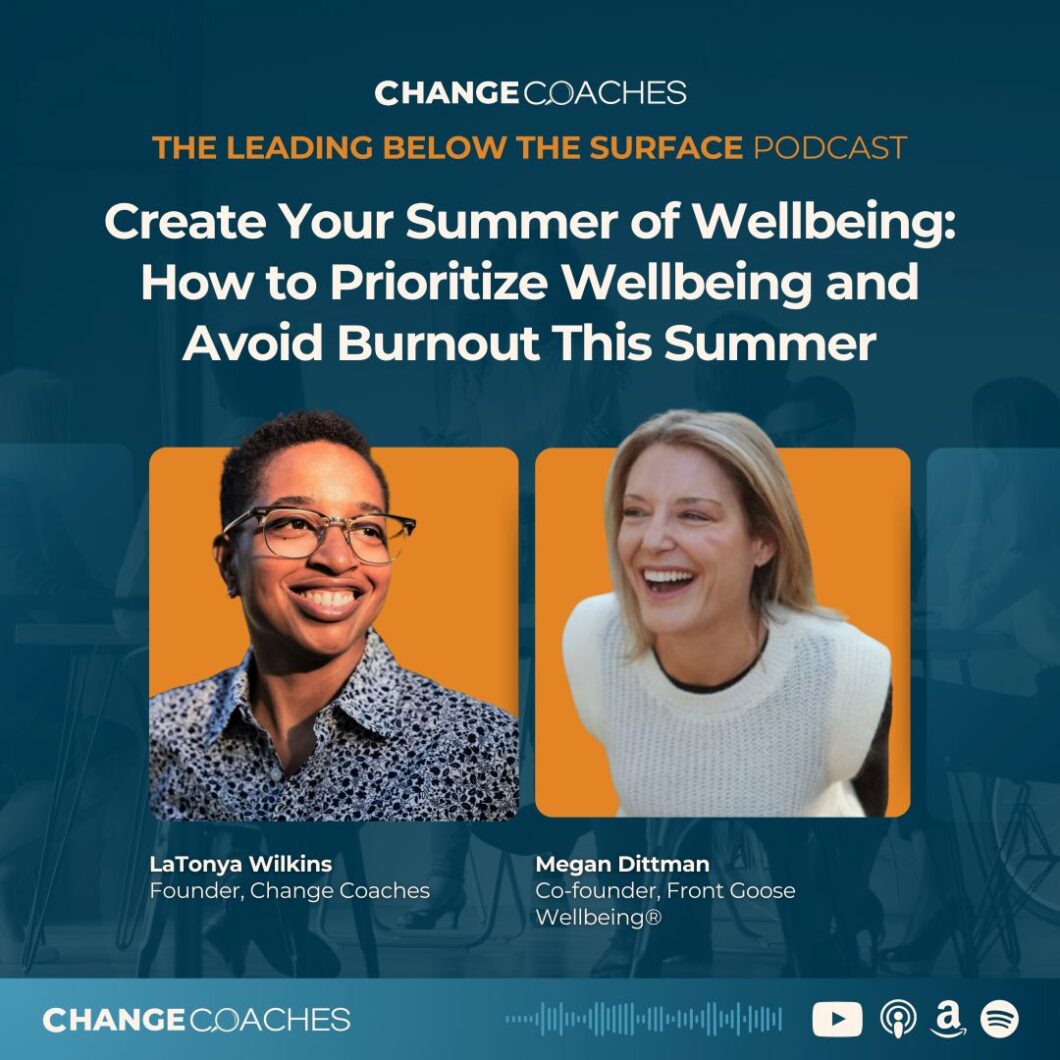
Ep 44: Resilient Leadership in Uncertain Times — Three Strategies for Growth

In this episode, LaTonya Wilkins explores the critical role of resilient leadership in navigating today’s complex workplace. Drawing from personal experiences and research, she shares actionable strategies for cultivating resilience to tackle challenges effectively. Listeners will gain insights into the definition of resilience, its significance in enhancing emotional intelligence and relationships, and the various factors that influence resilience, such as access to resources and community support.


Quotes:

LaTonya Wilkins: – If you’re still stuck in your old reality, you can’t create your new reality.

Context: This quote highlights the necessity of moving on from past situations to embrace new opportunities, a key theme in her discussion about resilience.

LaTonya Wilkins: – Remapping your mental models can help you adapt to new realities.

Context: She shares her personal experience of adjusting her daily routines after a loss, illustrating how changing perspectives can foster resilience.

LaTonya Wilkins: – We need people in our lives who have our backs, from a brag buddy to a cry buddy.

Context: This quote emphasizes the importance of community support in building resilience, highlighting the need for diverse relationships.


Resources from today’s episode:

Learn more about the Change Coaches Coaching Sprint by emailing ⁠info@changecoaches.io

–Change Coaches Guide to Create Psychological Safe Conversations Across Differences

–Change Coaches Newsletter


Transcript:

Note: This is a solo episode hosted by LaTonya Wilkins.

00:00:01 – LaTonya Wilkins Are you looking to get a head start on first quarter? Here at Change Coaches, we prepare people to lead in today’s workplace through leadership and organizational coaching. We offer one-on-one executive coaching and group coaching focused on competencies for middle managers. We also provide keynotes based on the Leading Below the Surface book. Our newest offering is empathy-based sales training, which develops your sales team, increases sales, and enhances customer connections. To learn more, visit changecoaches.io or email info@changecoaches.io.

00:00:48 – LaTonya Wilkins Hello everyone and welcome to the Leading Below the Surface podcast. I’m your host, Latonya Wilkins. Before we dive into today’s episode about resilient leadership and my journey with accepting resiliency, I encourage you to subscribe on YouTube and share this with your friends if it resonates. If you’re listening on a podcast app like Apple or Spotify, please follow us and let us know what resonates with you.

00:01:47 – LaTonya Wilkins Today’s topic focuses on resiliency and its importance. If you’ve resisted the concept of resiliency, I understand. I’ll share why I’ve recently embraced it. If you’re struggling with the challenges of the world or navigating setbacks, this episode is for you. It’s also relevant if you’re facing a major life change or uncertainty.

00:02:37 – LaTonya Wilkins I will first discuss resilience, my journey with it, and why it’s relevant today. Then, I’ll provide examples of resilience and conclude with tips for becoming more resilient in today’s times. So, what is resilience? I have a few definitions I like and will share some of those that I use in my keynotes.

00:03:12 – LaTonya Wilkins This definition is from Elizabeth Edwards, who’s an author and attorney. Resilience is accepting your new reality, even if it’s less good than the one you had before. You can fight it, scream about what you’ve lost, or accept it and try to create something good. I love this definition because it emphasizes accepting the new reality.

00:03:39 – LaTonya Wilkins Acceptance is a significant concept in leadership and spirituality. Acceptance means not fighting a situation, such as a relationship dissolving or losing a job. It’s about accepting that this is your reality. I mentioned in my last episode that I listened to Mel Robbins’ book, “Let Them,” which aligns with this idea of acceptance.

00:04:28 – LaTonya Wilkins For example, if you lose your job or feel excluded from a group, you must accept that as your reality. I used to think resilience was frustrating because it seemed like I had to be resilient in the face of bad things happening to me. But what if those bad things didn’t happen to me?

00:05:00 – LaTonya Wilkins There is a balance. Sometimes we can prevent harm from being done to us, and as leaders, we can take action to do that.

00:05:11 – LaTonya Wilkins However, some things are beyond our control. When I discuss my resilience, I refer to the deaths in my family and my parents’ divorce during my formative years, which have impacted me significantly. We’ll explore that further. But again, acceptance is key.

00:05:57 – LaTonya Wilkins A study on positive mental health includes resilience as a component. I appreciate this connection because it highlights resilience as a form of positive mental health. For example, consider bees as a metaphor.

00:06:16 – LaTonya Wilkins I use a lot of my keynotes. Think about climate change and how bees adapt. Bees are resilient because they take on different roles. They adjust to changes in conditions, extreme weather, and temperature changes.

00:06:48 – LaTonya Wilkins They adjust their roles in the colony. Resilience is part of life for bees. They adapt to different conditions. For example, a dog’s coat sheds in the summer and grows back in the winter. This is another example of adapting and being resilient.

00:07:18 – LaTonya Wilkins Why is resilience important? I view it as emotional intelligence (EQ). The more resilience we have, the better we can overcome challenges, adapt to change, and develop new skills. This leads to better health and relationships.

00:07:56 – LaTonya Wilkins More emotional intelligence gives us access to better relationships and a better life. It provides access to more resources and human connection. Who wouldn’t want more resilience, similar to emotional intelligence?

00:08:23 – LaTonya Wilkins Even though it’s not the easiest skill to acquire, who wouldn’t want more of it? When discussing resilience, I often wonder why some people have more resilience than others. Another question I frequently encounter in my keynotes is why some perceive challenges that aren’t truly significant. For example, consider a homeless person struggling without access to healthcare, while someone down the street has everything but gets upset over not receiving a desired pair of shoes or not being invited on a trip. Why does this person feel upset when they have so much? Before we judge, I want to challenge that perspective. A researcher named Michael Unger conducted a study on seven tensions that contribute to higher resilience in people.

00:09:55 – LaTonya Wilkins These tensions include: one, access to material resources; two, relationships; three, identity; four, collective sense of purpose; five, spirituality; six, power and control; seven, cultural adherence; eight, social justice; and nine, cohesion. Some individuals may lack resilience because they have had significant power and control over their lives. We will discuss this further.

00:10:43 – LaTonya Wilkins To summarize, the key factors are access to material resources, relationships, identity, power and control, cultural adherence, social justice, and cohesion. This study by Michael Unger provides insight into resilience. Now, let’s explore how to develop more resilience. If you’re still listening, it’s likely you want to enhance your resilience and learn tactics to achieve that.

00:11:15 – LaTonya Wilkins Reflect on a recent situation where you wished you had more resilience and could bounce back better. Also, think of a time when you demonstrated resilience and recovered effectively. For me, dealing with my mother’s passing was a challenging experience where I wished I had been more resilient. It took years to process, and I am still working through it.

00:11:54 – LaTonya Wilkins I wish I had more access to being resilient. In running a business, I adapt and see where I need to go. In the US, there’s a lot of uncertainty, and I accept that as the new normal.

00:12:25 – LaTonya Wilkins I learned some resilience from my experience with the loss of my mother. Now, I will share three ways to build resilience in this complicated world. The first tip is acceptance. I chose the definition I started with for this reason.

00:13:05 – LaTonya Wilkins Acceptance does not mean being irresponsible. It means recognizing what you can control and what you cannot. You control how and when you respond, if you respond, and who you form relationships with. For example, if you didn’t get invited somewhere or your team excludes you from discussions, accept it and find another opportunity. Once you accept, you step into resilience and can adapt to create your new reality.

00:14:09 – LaTonya Wilkins If you remain stuck in your old reality, you cannot create a new one. People often stay in jobs, friendships, or romantic relationships that have expired because they fear stepping into a new reality.

00:14:38 – LaTonya Wilkins Stepping into a new reality requires resilience, which I learned along the way. Number one is acceptance. Number two is remapping your mental models. I will share a situation involving loss. My dog passed away two years ago, and it was hard. He was my first pet, and I had him for 13 years. He was intertwined with my life and helped me through a lot.

00:15:28 – LaTonya Wilkins I learned a lot about loss when I lost him. I realized I needed to remap my brain. I used to walk him every morning and evening. After he died, I would wake up in the morning and feel the void. My schedule revolved around his, and I would feel sad when reminded of our walks.

00:16:22 – LaTonya Wilkins I was dealing with the loss and celebrating his life, but I wanted to create space for more positive experiences instead of just feeling sad. I started remapping my mental models. I began going to yoga at 7 AM and still do that. I also started working out in the morning and going for walks at night.

00:17:16 – LaTonya Wilkins I would take coaching clients in the late afternoon or do some writing. I also signed up for a pottery class, which helped remap my brain to engage in different activities. The second point is remapping your brain. The third point about building resilience is the importance of building community.

00:17:54 – LaTonya Wilkins We all need communities and people in our lives who support us, whether as a brag buddy or a cry buddy. An example of resilience through community is the recent shifts happening. I am recording this podcast on February 4th.

00:18:24 – LaTonya Wilkins In the United States, we just had a change in administration, and many challenges are arising. As a small business, I need to understand these changes. I am part of the National Small Business Association, so I consider how this affects me and the small business landscape, including tariffs.

00:18:53 – LaTonya Wilkins Instead of obsessively dwelling on these issues, I rely on my community. I built this community over the years, allowing me to discuss concerns rather than dwelling on negative possibilities. Engaging with my community enables better scenario planning and helps transition from an old reality to a new one.

00:19:23 – LaTonya Wilkins As I mentioned earlier, I am stepping out of the old reality into the new one. Take a moment to review what you wrote down. I will summarize the three tips for building resilience. Number one is acceptance, and number two is remapping your mental models.

00:19:45 – LaTonya Wilkins Number three is building community. If you didn’t listen to the last episode of Leading Below the Surface, listen to that one as it focuses on building community and social skills in a changing world. Reflect on the points from today. After hearing about resilience, consider which tips you will apply to situations where you lacked resilience. What can you learn from those situations? Lastly, how can you integrate these insights to build a resilient 2025? Thank you for joining, and we’ll see you next time.


Connect with us: 
Email us at info@changecoaches.io
Learn more about Change Coaches
Follow LaTonya on LinkedIn
Follow Change Coaches on LinkedIn
For More on the Book ⁠Leading Below the Surface

Ep 43: Strengthening Loose Ties: Rebuilding Community and Social Skills in a Digital World

In this enlightening podcast episode, LaTonya Wilkins dives into the critical theme of building relationships in contemporary society, especially in light of the growing issue of social isolation. LaTonya explores the importance of fostering connections, particularly for individuals in midlife or those transitioning out of college. With recent research highlighting loneliness as an epidemic, especially among younger generations like Gen Z, LaTonya aims to provide actionable strategies for expanding social circles and improving interpersonal skills.


Quotes:

LaTonya Wilkins: – Building relationships in our current society is essential, especially as we navigate through social isolation.

Context: In the introduction of the episode, I set the stage for discussing the importance of relationships in today’s world, particularly in light of recent societal changes and the impact of the pandemic.

LaTonya Wilkins: – Loose ties are more valuable in life than close ties.

Context: I discussed the concept of loose ties and their importance in networking and community building, referencing research that supports this idea.

LaTonya Wilkins: – If you want to connect better, go to new places and make eye contact.

Context: I provided practical advice for listeners on how to foster connections, emphasizing the importance of being present and engaging with others in social settings.

LaTonya Wilkins: – Start a friend or social diary to track your efforts in building connections.

Context: I suggested this strategy as a way to encourage listeners to be intentional about their social interactions and to reflect on their experiences.

LaTonya Wilkins: – Let your friendships naturally shed and grow back like a dog’s coat.

Context: I used this metaphor to explain the natural ebb and flow of relationships, encouraging listeners to embrace change in their social circles without taking offense.

LaTonya Wilkins: – Isolation influences how we vote and interact with others.

Context: I concluded the episode by discussing the broader societal implications of isolation, urging listeners to take action.


Resources from today’s episode:

Learn more about the Change Coaches Coaching Sprint⁠ by emailing ⁠info@changecoaches.io⁠

–Change Coaches Guide to Create Psychological Safe Conversations Across Differences

–Change Coaches Newsletter


Transcript:

Note: This is a solo episode hosted by LaTonya Wilkins.

00:00:01 – Are you looking to get a head start on first quarter? Here at Change Coaches, we prepare people to lead in today’s workplace through leadership and organizational coaching. We offer one-on-one executive coaching and group coaching focused on competencies for middle managers. We also provide keynotes based on the Leading Below the Surface book. Our newest offering is empathy-based sales training, which develops your sales team, increases sales, and enhances customer connections. To learn more, visit Changecoaches IO or email info@changecoaches.io.

00:00:48 – Hello everyone and welcome to the Leading Below the Surface podcast. I’m your host, Latanya Wilkins. Before we start, I want to share a bit about this episode. Today will be a solo episode, which I didn’t expect to record.

00:01:06 – This episode focuses on how to build relationships in our current society. If you’re looking to find your community, expand your friendship circle, or develop weak ties, this episode is for you.

00:01:39 – I understand how challenging this can be, especially when you’re no longer in college or are in midlife or your 30s and 40s. I recorded this episode after reading an article in The Atlantic titled “The Antisocial Century.” It caught my attention, so I spent the night reading it.

00:02:09 – I read it twice and want to discuss it along with other readings on this topic, including “The Anxious Generation.” I aim to conclude with how we can create better relationships to contribute positively to our society. I believe we can all improve in this area.

00:02:33 – I recorded this on January 21st, 2025, following a major U.S. presidential election. We anticipate significant changes in the U.S. and globally, and I want to explore how this topic and related events contribute to that change.

00:02:49 – I will cover that today. If you like this, please share it with anyone who can benefit. If you’re watching on YouTube, please follow and share. We just launched on YouTube and are trying to spread the word. Thank you to all our listeners.

00:03:13 – If there’s anything you want to discuss, please email me at infoangecoachesio. I try to respond to everyone. Let’s first talk about social isolation. I’ve noted a few things about this topic. The Surgeon General stated that loneliness is an epidemic, worse than smoking.

00:03:49 – I recently read the book “The Anxious Generation,” which discusses Gen Z being antisocial and spending a lot of time on social media without much face-to-face interaction. Therapists have also noted this trend, coaching Gen Z on social skills. Gen Z, I’m not trying to insult you; I’m discussing the research.

00:04:29 – Last year, I attended an event called Speed Friending at a neighborhood coffee shop, highlighting that people are lonely and seeking connection. I also read a book called “Let Them” by Mel Robbins, which I enjoyed. It discusses friendships and how to make them. I agree with many points she made, which I will discuss today. The book emphasizes accepting the world as it is and understanding how to make friends while allowing people to be themselves.

00:05:32 – A couple of things. Our social interactions have dipped at least 30%. For Gen Z, it is more than 30%, but across the board, it’s about 30%.

00:05:56 – People are having fewer relationships outside of work. Ten years ago, we went to dinner or happy hour with people. Now, we are doing that about 30% less on average.

00:06:22 – This was US-based research. At the IOC conference, I learned about a study where people were asked if they wanted to interact with someone on their commute and how that would make them feel. Most said they did not want to interact and thought it would not make them feel good.

00:06:51 – Interestingly, when they did interact, it was favorable. They ended up connecting with the person. We may have a confirmation bias, thinking social situations are a pain, but the research shows we actually enjoy these connections.

00:07:32 – Number three, I want to give a visualization. Think about the last time you went to your favorite restaurant, one that has limited seating but a lot of takeout.

00:07:57 – The author visualizes a change in our social interactions. I think about my favorite neighborhood Mexican restaurant in Chicago. They used to have a small indoor seating area where I enjoyed talking to the cooks and discussing their homemade pozole. However, they closed that space and never reopened after Covid. Now, they thrive on takeout, but I miss that third place experience. I still go there, but I pick up my food and leave.

00:08:22 – Many can relate to how our interactions have diminished. The study refers to these interactions as the middle ring. The inner ring consists of those close to us, while the outer ring includes acquaintances. The middle ring contains loose ties, which are significant.

00:08:35 – Loose ties, as discussed in the article “The Strength of Loose Ties,” are often more valuable than close ties. A friend might know someone who can help with a hobby or job. We are losing these loose ties, which is concerning.

00:09:25 – This loss negatively impacts us. Additionally, we are losing opportunities to practice social skills. Think back to a time when you engaged socially.

00:09:47 – I may not be the best example since I am a coach and frequently interact with others. I have an office outside my home, which I enjoy. However, returning to the Mexican restaurant, it served as a third place where I engaged in conversations about the community.

00:10:08 – I might not agree with them about the community, but that’s an opportunity to practice socializing. Talking to neighbors at block parties allows us to practice social skills and to disagree and agree. I remember growing up in Iowa, where my dad worked in manufacturing. He and his friends would disagree about certain things, but they respected each other and communicated daily. That was practice for them, but we’re losing that.

00:10:43 – We’re losing this practice. When I was a kid, I had a community of elders who weren’t blood family but took care of me. They helped out, and that is happening less. We’re working from home more, which has downsides. Hybrid work is probably the best way to collaborate and innovate. I know people are passionate about this, but I’m just stating the research.

00:11:24 – When I talk to people, especially young adults, they express discomfort in social situations. I attended two parties last weekend, one with people in their 20s, and I noticed the discomfort in the air. People weren’t lingering as long, and these trends are concerning. What does this mean? It influences how we vote, interact, and think. We are social creatures, and it also affects our mental health.

00:12:09 – I reviewed an article discussing trends on TikTok where people expressed a desire to stay home. While it may be fine occasionally, it keeps happening, which is troubling.

00:12:42 – People are spending more time in solitude. I spent the whole last weekend mostly in solitude. I needed it because I traveled a lot before that and had a lot going on. It’s becoming a trend.

00:12:54 – AI is becoming people’s friends, but humans are social creatures. This contributes to our society. Think about ten years ago when you had more relationships. If you have children, they were probably out more, which shaped us into more well-rounded individuals.

00:13:19 – We develop emotional intelligence when we are with people and learn from them. If you’re listening to this podcast, we all want to be better members of society. We want to connect better across differences and build our connections. It’s a human need.

00:13:46 – We need to interact with people. Some of you may be listening because you feel uncomfortable or haven’t found your community. Let’s talk about that. I will discuss how to find these communities and end with next steps on how to be better members of society.

00:14:15 – I will also address how to talk about this with your organization and the problems related to well-being. If you’re feeling overwhelmed by this, let me give you three steps to connect better and define new connections. Number one is to go to new places in your neighborhood, even if you don’t feel like going out. Just go and make eye contact.

00:14:57 – Put your phone down. One of my childhood friends and I have been discussing loneliness. She is a parent and shared how she felt lonely but managed to start conversations with other parents at her child’s sporting events. After attending many events, everything changed when she put her phone down and made eye contact. I call this P to P listening, which involves listening deeply.

00:15:33 – P2P listening is about environmental listening. Try to make eye contact and smile at people in a non-creepy way. I live in Chicago and frequent a coffee shop. Sometimes I go there to work on Saturdays. Last time, I intended to talk to people, and three people engaged with me. While I was working, I also aimed to be social. I had a great conversation with someone, exchanged numbers, and discussed a book someone was reading.

00:16:20 – They were reading Malcolm X, which led to a meaningful conversation. If I had been focused solely on my computer, I would have missed that interaction. So, number one: go places, make eye contact, and smile. Number two: start a friend or social diary.

00:16:36 – I recommend this because not everything will work. The coffee shop strategy worked that day, but if it hadn’t, what would be next? A diary is essential. If one approach fails, try another activity. Aim for two activities a week or explore different options. Start this diary with time-bound goals or weekly intentions.

00:17:06 – This week, I want to start a new conversation with someone outside of your family unit. Having this diary and these intentions is important. Number three is to let your friendships and social circles naturally shed and grow back. Think about a dog; they shed and grow their hair back thicker.

00:17:50 – As we go through this, consider if there are friends in your life that need to drop off. There’s nothing wrong with that. Everyone gets busy, and some people have children at different stages in life.

00:18:07 – You might take hiatuses. For example, I had a close friendship in high school and college that faded after college but has since returned. Let things go through seasons; you might naturally shed but then grow back. If people fall off, let them. I love that concept—let them fall off and come back later.

00:18:42 – We don’t need to take offense. People’s lives change, and we should go through the cycle of change. As you shed, you’re gaining. Your coat gets thicker and of better quality. By letting something shed, you open the way for something new.

00:19:13 – I want to end with how we talk about this. We focused on personal benefits, but think about the organizational impact. You’ll be a better leader and colleague if you can connect with different types of people. This connection enhances your well-being, creates oxytocin, and strengthens bonds, benefiting society as a whole.

00:19:51 – This isolation causes us to vote a certain way or to believe things that may not be true, and it reduces empathy. In-groups strengthen while out-groups weaken. Think about how this fits into your life. That’s all I have today. In the next episode, I’ll focus on the State of the part 2. If you catch us every episode, you might want to go back to the first episode.

00:20:29 – I’ll put the link in the comments for you to review. Thanks everyone, and we’ll see you next time.


Connect with us: 
Email us at ⁠info@changecoaches.io⁠
Learn more about ⁠Change Coaches⁠ 
Follow LaTonya on ⁠LinkedIn⁠ 
Follow Change Coaches on ⁠LinkedIn⁠ 
For More on the Book ⁠Leading Below the Surface
Study mentioned in today’s episode.